Cats, squirrels, chipmunks, birds, and other animals sometimes dig in garden planters looking for loose soil, bulbs, seeds, insects, or a place to bury food. The digging can expose roots, disturb newly planted bulbs, scatter potting mix, and damage young plants.
The most dependable way to keep animals out of flower pots is usually to make the soil physically difficult to access. Wire mesh, appropriate netting, and other barriers tend to work more consistently than homemade scent repellents.
Best ways to keep animals out of planters
- Cover exposed soil with secured wire mesh or another plant-safe barrier.
- Use coarse decorative stones when appropriate, without blocking drainage.
- Protect newly planted bulbs with wire mesh until they establish.
- Keep food sources such as birdseed and spilled pet food away from planters.
- Move containers away from easy hiding places when chipmunks are a recurring problem.
- Use only repellents labeled for the animal, plant, and location where they will be applied.
- Avoid homemade irritants where pets or children can contact them.
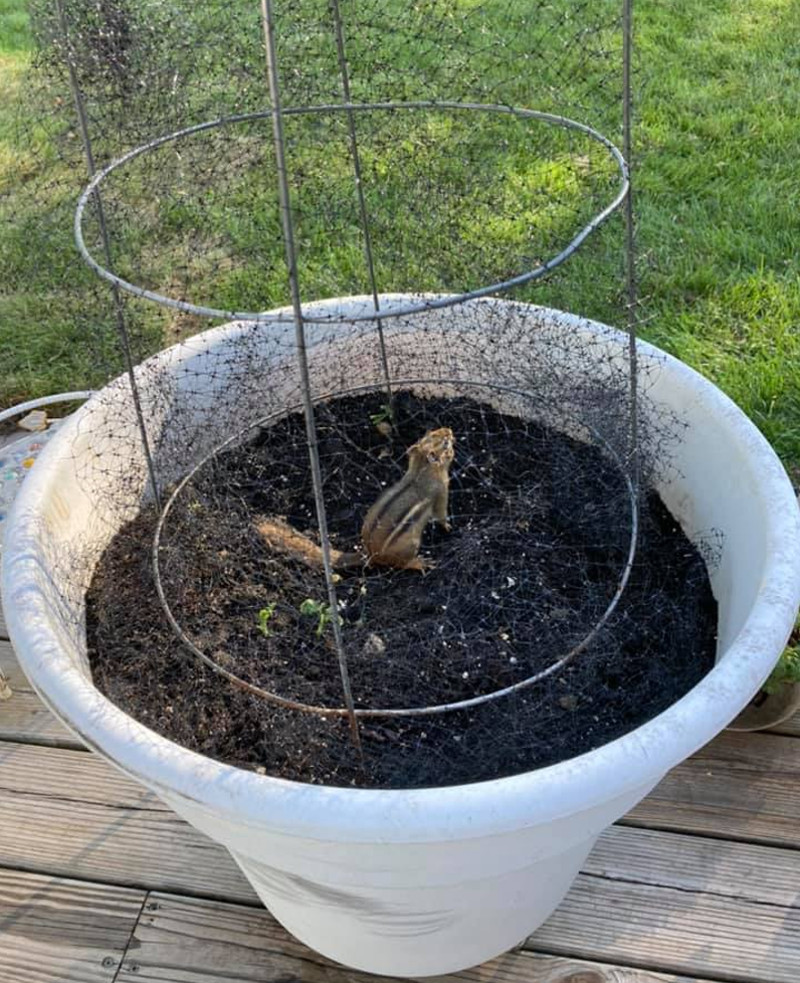
Why Do Animals Dig In Flower Pots?
Loose container mix is easy for small animals to dig through, especially compared with compacted garden soil.
Different animals may visit planters for different reasons:
Squirrels
May bury nuts or investigate freshly disturbed soil and bulbs.
Chipmunks
May search for seeds, bulbs, insects, or places to cache food.
Cats
May be attracted to loose dry soil as a place to dig or eliminate.
Birds
May disturb soil while looking for insects, seeds, or nesting material.
Use A Physical Barrier First
Physical exclusion is usually the most reliable way to prevent repeated digging because the animal cannot reach the soil even if the planter still smells or looks interesting.
University of Minnesota Extension recommends fencing, netting, and similar physical barriers as the most effective starting point for wildlife damage. Wire placed over newly planted bulbs can also prevent squirrels and chipmunks from digging them up.
Wire Mesh
Cut mesh to fit around existing stems and secure it over exposed potting mix.
Plant-Safe Netting
Can help with birds and climbing animals when installed securely without trapping wildlife.
Coarse Stones
A layer of larger decorative stones can make digging less appealing when plant crowns and drainage remain unobstructed.
Protecting Bulbs In Containers
Squirrels and chipmunks are especially likely to investigate freshly planted bulbs.
After planting, place wire mesh horizontally over the soil and secure it around the edges. Choose openings large enough for emerging shoots to grow through.
The barrier can often be removed after plants are established if digging is no longer a problem.
Avoid sharp deterrents. Toothpicks, spikes, broken materials, and other objects intended to poke an animal can also injure pets, children, wildlife, or the gardener caring for the planter.
Do Smells Keep Animals Out Of Flower Pots?
Scent and taste repellents can sometimes discourage wildlife, but results vary and the effect usually decreases with rain, watering, and time.
If a repellent is needed, use a commercially prepared product that is labeled for the target animal and for use around the plants or location involved. Follow the label directions carefully.
Avoid assuming that something is safe simply because it is described as natural.
Avoid Essential Oils Around Accessible Pet Areas
Concentrated essential oils should not be used casually on potting mix where dogs, cats, or other pets may walk through them, lick them, or contact the treated soil.
The ASPCA notes that concentrated essential oils can cause health problems in pets, and cats are particularly sensitive to certain oils.
Eucalyptus oil is therefore not a good general recommendation for keeping animals away from planters.
What About Cayenne Pepper Or Hot Sauce?
Capsaicin, the compound that gives hot peppers their heat, is used in some registered animal-repellent products.
However, sprinkling loose cayenne powder or spraying homemade hot-pepper mixtures around areas used by pets can expose eyes, noses, paws, and skin to an irritant.
If you want to use a capsaicin-based repellent, choose a product specifically labeled for that purpose and follow its instructions instead of mixing a homemade treatment.
Do Coffee Grounds Keep Animals Away?
Coffee grounds are not a dependable wildlife barrier, and they should not be heavily layered over container soil.
Used coffee grounds are also generally close to neutral after brewing, so they do not reliably acidify potting mix.
If you want to reuse coffee grounds, adding moderate amounts to a compost pile is usually more useful than relying on them as an animal repellent.
How To Keep Cats Out Of Flower Pots
Cats may dig in large planters because the loose soil resembles a convenient litter area.
The safest strategy is to make the soil inaccessible or uncomfortable to dig without creating anything sharp or hazardous.
Try:
- Secured mesh over exposed potting mix
- Large smooth decorative stones around established plants
- Moving large indoor planters to locations the cat cannot easily access
- Providing an appropriate litter box and keeping it clean if the problem involves a household cat
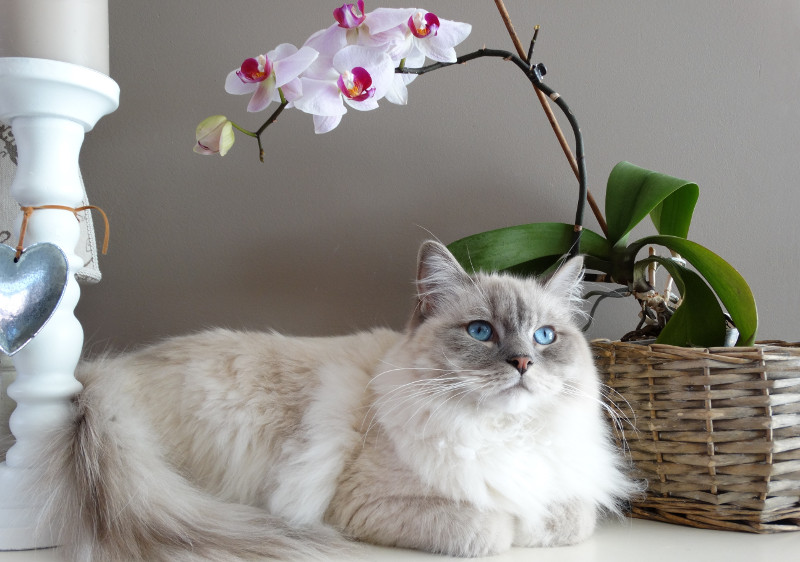
Avoid spraying a cat with irritants or placing sharp objects in the pot. Also avoid concentrated essential oils where a cat can contact or ingest them.
How To Keep Squirrels Out Of Flower Pots
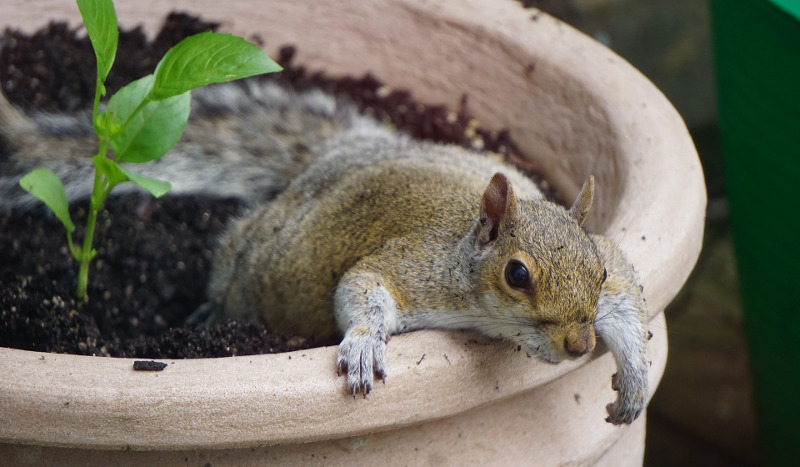
Squirrels commonly dig in loose soil to bury or retrieve food and may also investigate newly planted bulbs.
A physical barrier is usually more dependable than trying to overpower their sense of smell.
Place secured wire mesh across the top of the container, cutting openings for plant stems as needed. For an established planter, coarse decorative stones can also reduce the amount of loose exposed soil available for digging.
Reduce Nearby Food Sources
Bird feeders, spilled seed, unsecured garbage, fallen nuts, and outdoor pet food can encourage squirrels to spend more time around patios and planters.
Reducing easy food sources will not eliminate squirrels, but it can make the area less attractive.
How To Keep Chipmunks Out Of Flower Pots
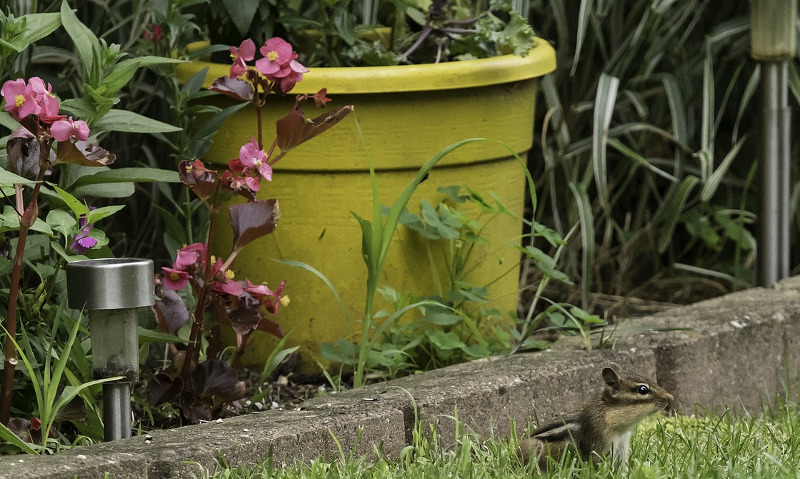
Chipmunks may dig for seeds, bulbs, insects, or stored food. Like squirrels, they are much easier to stop with a physical barrier than with temporary odors.
Wire mesh fitted around the plants is particularly helpful for containers with bulbs.
You can also make the immediate area less attractive by reducing dense hiding spots next to the containers. Chipmunks often travel between cover, so open space around a frequently disturbed planter may reduce activity.
Does Mulch Keep Animals Out Of Planters?
Mulch can help cover bare soil, but ordinary loose mulch is not a dependable barrier against a determined squirrel, chipmunk, or cat.
Very thick mulch can also bury plant crowns, hold excess moisture around stems, or reduce the usable space at the top of a small planter.
Use mulch primarily for moisture and temperature management rather than as your main pest-control method.
Can You Put Rocks On Top Of Potting Soil?
Larger decorative stones can be useful on the surface of an established planter when they are used to make digging more difficult.
Leave space around plant stems and crowns, and do not create such a thick layer that checking soil moisture becomes difficult.
Surface stones are different from putting a layer of gravel underneath the potting mix. Gravel at the bottom of a planter does not improve drainage.
Learn more in our Ultimate Guide To Drainage For Potted Plants .
What About Predator Urine?
Predator-scent products are sometimes marketed as wildlife repellents, but effectiveness can be inconsistent and animals may become accustomed to odors that are not paired with a real threat.
For planters, physical exclusion is usually simpler and more dependable.
Identify The Animal Before Choosing A Solution
Different animals leave different signs, so identifying the visitor can save time.
Small Holes
Often associated with squirrels or chipmunks burying or retrieving food.
Bulbs Missing
Squirrels and chipmunks commonly investigate newly planted bulbs.
Large Disturbed Area
Cats or larger animals may move significantly more potting mix while digging.
Surface Scratching
Birds may toss mulch or potting mix while searching for insects and seeds.
Preventing Future Problems
- Cover freshly planted bulbs until shoots are established.
- Remove spilled birdseed and other nearby food sources.
- Avoid leaving large areas of freshly disturbed bare potting mix exposed.
- Use barriers before turning to repeated repellent applications.
- Check netting and wire regularly so wildlife cannot become trapped.
- Choose products specifically labeled for the animal and location if a repellent is necessary.
Related Container Gardening Guides
Sources
- University of Minnesota Extension — Keeping Animals Out Of Your Garden
- University of Minnesota Extension — Planting Bulbs, Tubers And Rhizomes
- Penn State Extension — Tree Squirrels
- ASPCA Animal Poison Control Center — Essential Oils Around Pets
- Oregon State University Extension — Coffee Grounds In The Garden

Written By
Co-Founder of Plant Addicts
Published September 1, 2020 | Updated October 5, 2026