
Hanging baskets add color and growing space to patios, porches, balconies, decks, fences, and garden structures. They can be filled with flowering annuals, foliage plants, herbs, edible crops, houseplants, or combinations designed to trail over the sides.
Growing plants in hanging baskets is similar to other forms of container gardening, but baskets usually dry out faster and can be more exposed to wind and sun. Choosing compatible plants, using a lightweight potting mix, providing excellent drainage, and checking moisture frequently are the keys to keeping hanging baskets healthy throughout the season.
Hanging basket basics
- Combine plants with similar sunlight and moisture needs.
- Use a lightweight potting mix rather than garden soil.
- Make sure the basket drains freely.
- Check moisture frequently, especially during hot or windy weather.
- Water thoroughly until excess drains from the bottom.
- Fertilize according to plant needs and product directions.
- Use secure hardware rated for the basket's fully watered weight.
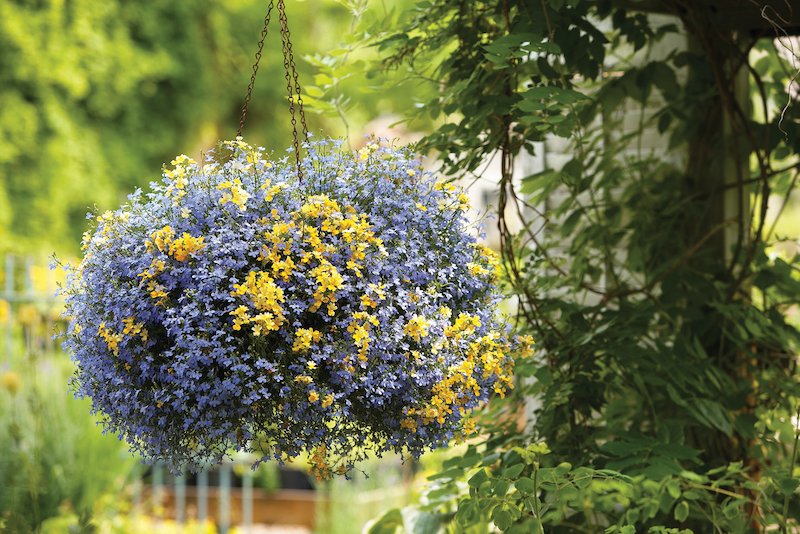
Planting Hanging Baskets
Start by choosing plants with compatible growing requirements. Plants sharing a basket should generally prefer similar amounts of sun, water, and fertilizer.
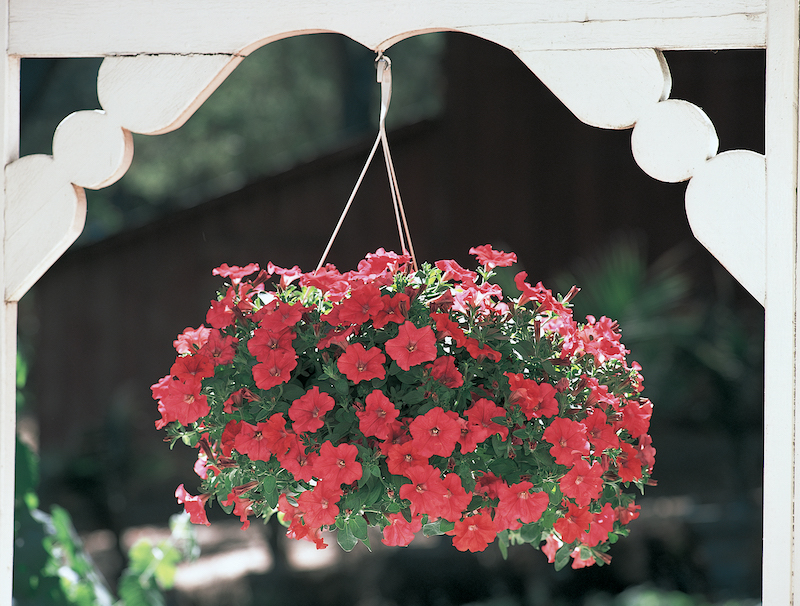
A full-sun petunia, for example, is usually a better companion for other sun-loving annuals than for a plant that prefers cool, shaded conditions. Some plants can tolerate a range of light levels, so always check the needs of the specific variety you are growing.
Herbs can also be mixed with flowering annuals if their growing requirements are compatible. Trailing herbs such as thyme or oregano can be especially attractive along the edge of a basket.
Choose An Appropriate Basket Size
Basket size affects how many plants you can grow, how quickly the potting mix dries, and how stable the planting remains.
Larger baskets provide more root volume and generally hold moisture longer than very small baskets. Smaller containers are better suited to one compact plant or a limited combination.
Avoid overcrowding. A densely planted basket may look full immediately, but the plants still need enough root space, water, air, and nutrients to remain healthy as they mature.
Match Plants To The Location
Consider the amount of direct sun the basket will receive after it is hung. Exposure can be very different several feet above the ground or along the edge of a porch compared with a protected garden bed.
Full Sun
Petunias, calibrachoa, verbena, lantana, and many trailing annuals perform well with abundant direct light.
Part Shade
Begonias, coleus, fuchsia, impatiens, and many foliage plants are useful where afternoon shade is available.
Edible Baskets
Herbs, strawberries, leafy greens, and compact edible plants can work well when light and moisture needs match.
Designing A Hanging Basket
The same thriller, filler, spiller concept used in traditional container gardening can also work in hanging baskets.
Thriller
An upright or eye-catching plant that gives the basket height and structure.
Filler
Mounding plants that fill the center and create a lush, full appearance.
Spiller
Trailing plants that cascade over the edge and soften the sides of the basket.
Hanging baskets can also look beautiful with a single vigorous plant. One large petunia, fuchsia, fern, or trailing houseplant may eventually fill the entire container.
When To Put Hanging Baskets Outside
Tender annuals and tropical plants should generally be moved outdoors only after the risk of frost has passed and temperatures are appropriate for the species.
If a late frost or unusually cold night is forecast, move portable baskets into a protected location such as a garage, porch, or other frost-free area.
The same strategy can extend the display in fall by protecting baskets from isolated early frosts.
Drainage For Hanging Baskets
Hanging baskets need excellent drainage. Because the root zone is relatively small, plants can suffer quickly if the growing medium remains waterlogged.
Solid plastic or wood baskets should have drainage holes in the bottom. If a plastic basket has a removable drainage tray, make sure water is not being trapped around the roots for long periods.
Wire baskets lined with sphagnum moss or coconut coir usually drain very freely. Illinois Extension notes that these lined baskets can also lose a significant amount of moisture through the sides, which means they often need more frequent watering. :chatgpt-content-reference{index="1"}
Some coir liners include an interior moisture barrier to slow water loss. If adding a plastic liner yourself, make sure the bottom still has holes so excess water can drain.
Best Potting Mix For Hanging Baskets
Use a lightweight potting mix formulated for containers rather than soil dug from the garden.
Garden soil can become dense and heavy in containers, particularly after watering. A quality container mix is designed to provide a better balance of moisture retention, drainage, and air around the roots.
Many mixes contain ingredients such as composted bark, perlite, vermiculite, coconut coir, peat, or similar lightweight materials.
Fresh potting mix is especially useful when the previous basket had disease problems or the old growing medium has broken down and compacted.
Caring For Hanging Baskets
Hanging baskets often require closer attention than larger containers sitting on the ground.
Illinois Extension notes that hanging containers are particularly prone to drying because wind and reflected heat increase moisture loss. :chatgpt-content-reference{index="2"}
As plants fill the basket later in the season, the roots and foliage use more water, so a basket that needed watering every few days in spring may require daily or even more frequent attention during hot summer weather.

Watering Hanging Baskets
Watering is one of the most important parts of hanging-basket care. Check the growing medium frequently instead of relying only on a fixed schedule.
Insert your finger into the top inch or so of potting mix. If it feels dry and the plants prefer even moisture, it is usually time to water.
You can also judge smaller baskets by weight. A recently watered basket will feel substantially heavier than the same basket after much of the available water has been used.
Apply water slowly and thoroughly until excess water drains from the bottom. Illinois Extension recommends completely wetting the growing medium each time rather than applying only small amounts to the surface. :chatgpt-content-reference{index="3"}
Depending on basket size and weather, plants may need water every day or even more than once per day during hot, dry conditions. University of Minnesota Extension notes that container plants can require watering more than once daily when temperatures are high and containers are small. :chatgpt-content-reference{index="4"}
Do not wait for severe wilting. Repeatedly allowing hanging baskets to dry completely can reduce flowering, cause leaf or flower drop, and stress the plants.
Use A Watering Wand For High Baskets
A long-handled watering wand attached to a hose is useful for baskets that are difficult to reach. Use a gentle shower setting so the potting mix is moistened without being washed out of the basket.
Direct water primarily toward the growing medium rather than repeatedly wetting the foliage and flowers.
Fertilizing Hanging Baskets
Frequent watering can leach nutrients out of the growing medium, so actively growing hanging baskets often benefit from regular fertilizer applications.
Both water-soluble and slow-release fertilizers can work well. Illinois Extension recommends liquid fertilizer about every two weeks for many container plants or using an appropriately labeled slow-release product. :chatgpt-content-reference{index="5"}
Follow the fertilizer label rather than assuming all baskets need the same schedule. Fast-growing flowering annuals may need more regular feeding than slow-growing foliage plants.
Apply liquid fertilizer to moist potting mix rather than to completely dry roots. Illinois Extension specifically recommends moistening the growing medium first to reduce the risk of fertilizer injury. :chatgpt-content-reference{index="6"}
For edible baskets, use any fertilizer that is labeled for use on the edible crops you are growing. Organic products such as fish- or seaweed-based fertilizers can be options, but they are not the only products suitable for edible container plants.
For more detail, see our complete guide to Fertilizing Plants In Containers .
Keeping Hanging Baskets Full And Blooming
Some annuals become leggy or uneven by midsummer. Trimming long stems can encourage branching and fresh growth, depending on the plant.
Penn State Master Gardeners recommend cutting back worn-looking hanging baskets during summer to encourage renewed growth.
Remove dead flowers where appropriate, although many modern annual varieties are self-cleaning and do not require regular deadheading.
Winter Care For Hanging Baskets
What you do with a hanging basket at the end of the season depends on the plants and the container.
Annuals that have completed their life cycle can be composted if they are free of serious pest and disease problems.
Reusable plastic, metal, or wire baskets can be cleaned and stored for the following year. Coir or moss liners may be reusable if they remain in good condition.
Perennials require more careful planning. A plant hardy in the landscape may be less cold-hardy when its roots are exposed above ground in a hanging basket. The small root zone freezes much more readily than garden soil.
If you want to overwinter a hardy perennial, options include planting it into the landscape before the ground freezes, moving it into a larger protected container, or overwintering it using a method appropriate for the species and your climate.
Tender perennials such as some fuchsias or pelargoniums may be overwintered indoors under appropriate conditions, but care varies by plant. Do not assume every tender perennial should simply be cut back and stored in a dark basement.
Should You Reuse A Hanging Basket Liner?
Coir and moss liners can sometimes be reused if they are still structurally sound and were not associated with a significant disease problem.
Replace liners that are badly deteriorated, contaminated, or difficult to clean.
Growing Hanging Baskets Indoors
Hanging houseplants are a useful way to add greenery without using floor or shelf space.
The two most important considerations are light and weight.
Hang the basket where the plant receives the amount of light it needs, and remember that a container becomes considerably heavier after watering.
Use ceiling hooks, brackets, or other hardware rated for more than the fully watered weight of the basket. Hardware should be anchored into appropriate structural framing or installed according to the manufacturer's instructions.
Safety matters. Do not rely on lightweight adhesive or suction hooks unless the manufacturer specifically rates them for the fully watered basket's weight and the mounting surface.
Watering Indoor Hanging Baskets
If a basket can be removed easily, watering it over a sink or bathtub is convenient. Apply water thoroughly, let excess water drain, and return the basket to its location afterward.
If the basket cannot be removed, use a container with a secure drip tray and empty standing water so the root zone does not remain saturated.
Common Hanging Basket Problems
Wilting Frequently
The basket may be too small, drying quickly, or exposed to excessive wind and heat.
Few Flowers
Check light, fertilizer, moisture, and whether the plants have become overgrown.
Yellowing Leaves
Both excessive moisture and nutrient deficiencies can contribute to yellow foliage.
Water Runs Through Immediately
The growing medium may be extremely dry or the root system may have filled most of the basket.
Hanging Basket Growing Tips
- Combine plants with similar light and moisture needs.
- Use lightweight container potting mix rather than garden soil.
- Make sure excess water can drain from the basket.
- Check moisture frequently during hot, sunny, or windy weather.
- Water thoroughly instead of giving frequent shallow sips.
- Fertilize according to the type of plant and fertilizer label.
- Trim leggy plants when appropriate to encourage fresh growth.
- Make sure hooks and brackets can safely support the fully watered basket.
For more ideas about plant combinations, drainage, watering, and container care, visit our Container Gardening Guide .
Sources
- Illinois Extension — Hanging Baskets
- Illinois Extension — Watering Container Gardens
- Illinois Extension — Fertilizing Container Gardens
- Illinois Extension — Container Material Choices
- University of Minnesota Extension — Fertilizing and Watering Container Plants
- Penn State Extension — Summer Gardening Chores

Written By
Senior Gardening Writer at Plant Addicts
Published January 19, 2023 | Updated October 2, 2026