Trees and tree-like shrubs can bring height, shade, privacy, and year-round structure to patios, porches, balconies, and other outdoor living spaces. Growing them in planters also makes it possible to use striking specimen plants where planting directly in the ground is not practical.
The best trees for planters stay relatively compact, tolerate restricted root space, and can be matched to a container large enough for long-term growth. Mature size, root space, drainage, wind exposure, winter hardiness, and the total weight of the planted container are especially important when growing woody plants in pots.
What makes a tree good for a planter?
- Compact or dwarf mature size
- A root system that can be supported by a large container
- Good tolerance of the available sun, heat, and wind
- A stable growth habit that will not easily tip in wind
- Adequate winter hardiness if the tree stays outdoors year-round
- A planter with reliable drainage
- A realistic plan for repotting, root pruning, or eventually transplanting the tree
Best Size Of Trees For Planters
Mature size is one of the most important considerations when selecting a tree for a container.
Dwarf and compact cultivars are usually the easiest choices because they grow more slowly and remain proportional to a patio-sized planter for longer. Full-size trees may work temporarily when young but can eventually outgrow even a large container.
Container growing should not be treated as a permanent way to force a naturally large tree to remain small. A severely root-bound tree can become stressed, dry out rapidly, decline in vigor, or become unstable.
Plan ahead. Some container-grown trees can remain in large planters for many years, while others may eventually need a larger pot, root pruning, or transplanting into the landscape.
Choose A Large, Stable Planter
Trees have larger root systems and more top growth than most container plants, so they need substantial planters.
A larger container provides more room for roots, holds moisture more evenly, provides better winter insulation, and adds stability against wind.
Consider the weight of the planter after it is filled with potting mix, a mature tree, and water. Concrete, stone, ceramic, wood, resin, and fiberglass can all work, depending on the location and whether the container needs to be moved.
For help choosing the right container, see Choosing The Right Planter For Your Plants .
1. Arborvitae
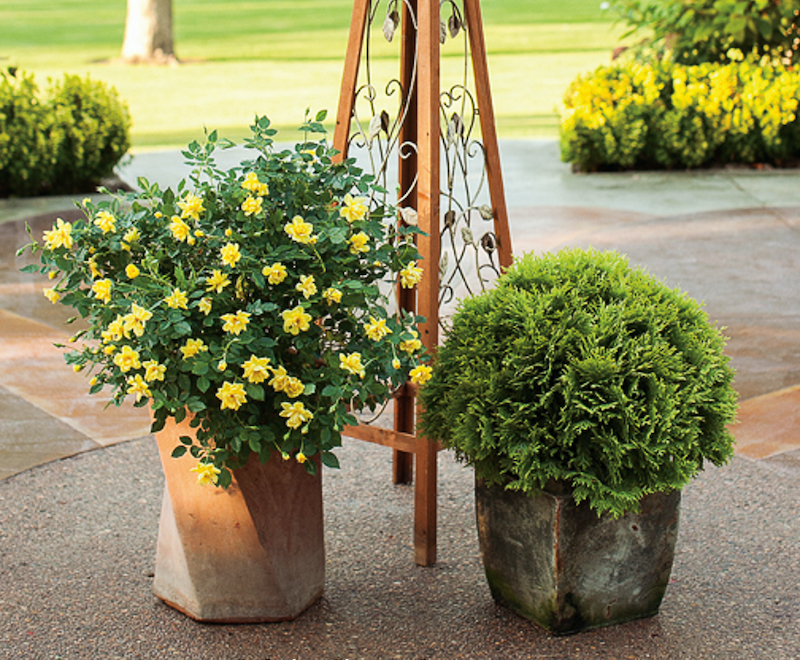
Arborvitae are popular container evergreens because cultivars are available in rounded, pyramidal, narrow, and upright forms.
Compact varieties can work well beside an entrance or on a patio, while narrow upright cultivars can add screening without taking up as much horizontal space.
Mature size varies tremendously, so choose the exact cultivar carefully. A compact globe-shaped arborvitae may remain only a few feet tall, while other cultivars can eventually become large landscape plants.
Arborvitae foliage remains evergreen through winter, which means plants continue losing moisture even while dormant. Check container moisture during dry winter periods when the potting mix is not frozen.
Deer browsing also varies by cultivar, region, and local deer pressure, so arborvitae should not be considered universally deer-resistant.
2. Dwarf Alberta Spruce
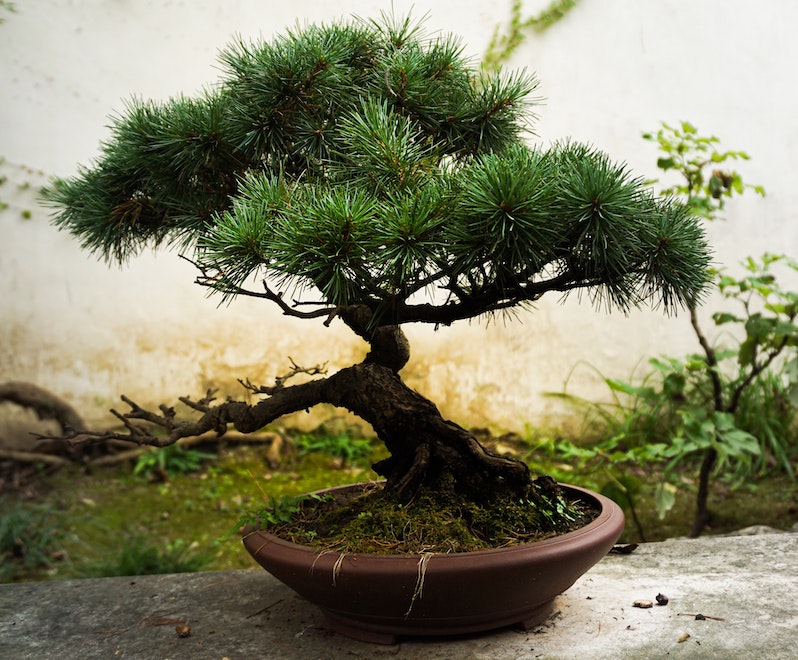
Dwarf Alberta spruce is a slow-growing conifer with a naturally dense, conical shape that works well as a long-term container specimen.
The evergreen needles provide year-round color, making the plant especially useful near entrances or as a living holiday accent.
Although called dwarf, mature plants can eventually reach several feet tall. Growth is slow, but the tree still needs increasingly generous root space as it matures.
Keep the growing medium consistently moist but well drained. Container-grown spruce should not be allowed to repeatedly dry out, particularly during hot or windy conditions.
3. False Cypress
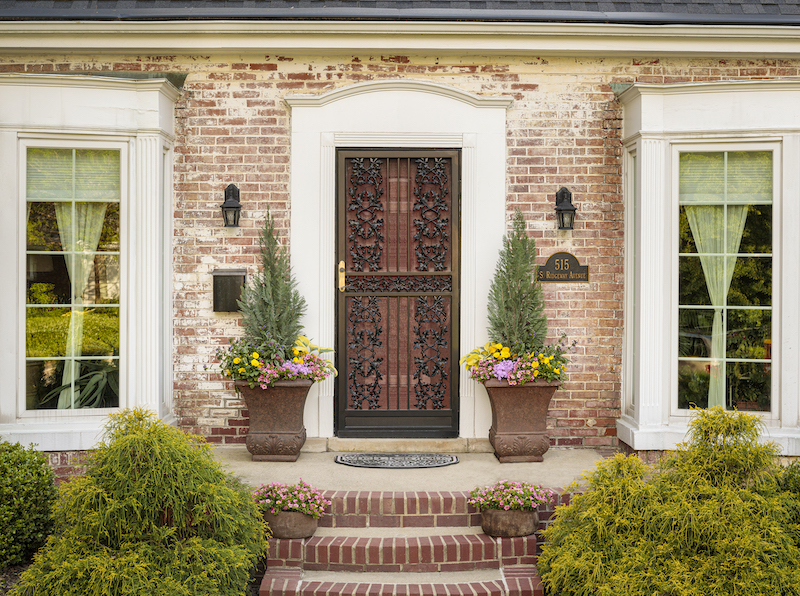
False cypress offers soft evergreen foliage in colors ranging from green to blue-green and gold.
Compact cultivars are excellent for planters because their foliage provides structure throughout the year without requiring flowers for visual interest.
Light and moisture requirements vary by cultivar, but most container-grown false cypress perform best when the growing medium remains moderately moist and drains freely.
4. Fine Line Buckthorn
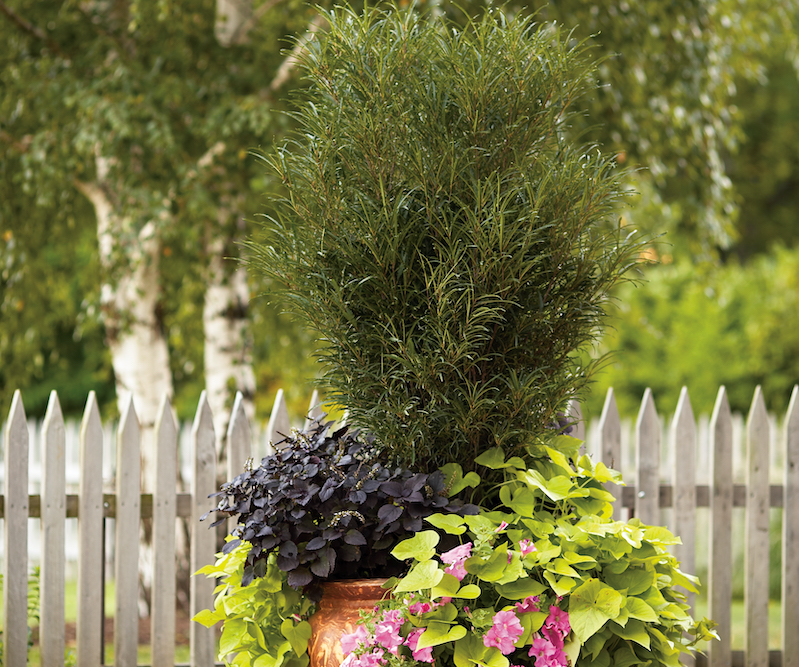
Fine Line Buckthorn has an unusually narrow, upright growth habit and fine-textured foliage that gives it a light, architectural appearance.
Its narrow form makes it useful beside doors, along patios, or anywhere a vertical accent is needed without taking up a large amount of floor space.
Fine Line is better thought of as an upright shrub than a traditional shade tree, but its form allows it to fill the same vertical design role in a large container.
Give it adequate root space and monitor moisture closely during hot weather. Container plants dry more quickly than established shrubs growing in the landscape.
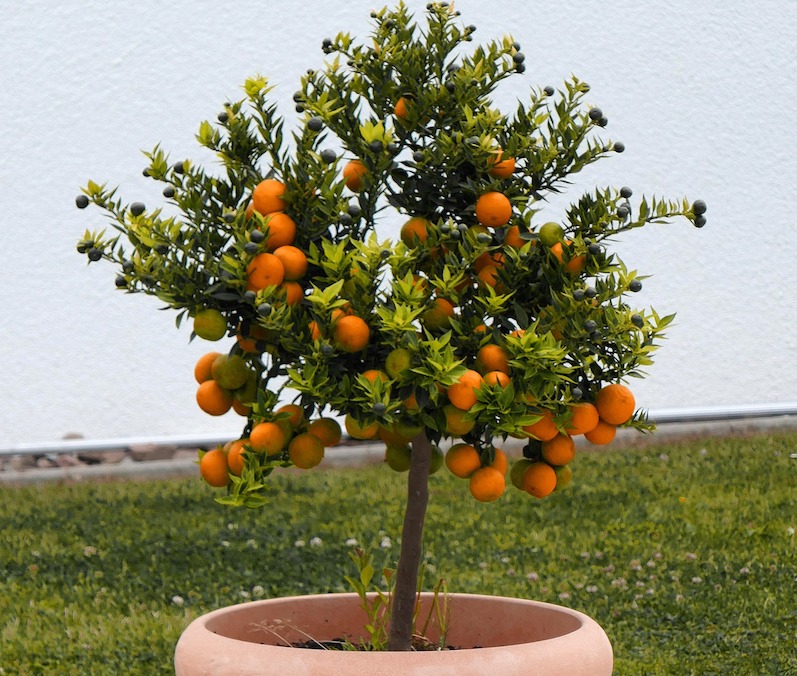
5. Dwarf Citrus Trees
Dwarf lemons, limes, oranges, mandarins, and other citrus trees combine ornamental value with the possibility of homegrown fruit.
Citrus generally performs best with abundant sunlight and excellent drainage. Container-grown trees also need consistent moisture, but the roots should not remain waterlogged.
Dwarf or grafted varieties are usually easier to manage in containers than standard-sized citrus.
Citrus is not cold hardy in much of the United States. Where freezing temperatures occur, container trees generally need to be moved into a bright, protected, frost-free location for winter.
6. Japanese Maples
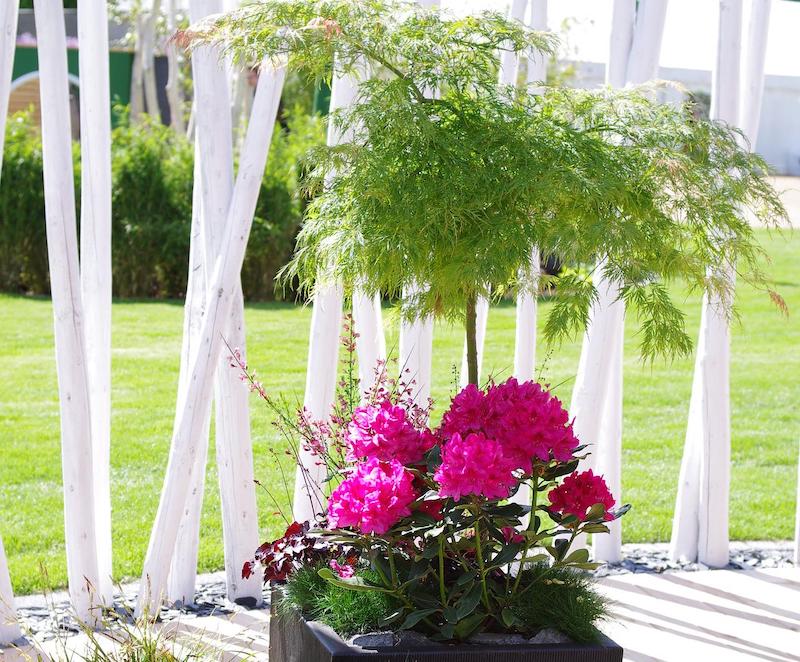
Japanese maples are some of the most striking trees for large containers because of their graceful branching, distinctive leaves, and excellent fall color.
Dwarf and slow-growing cultivars are usually the best candidates for long-term container culture.
Japanese maples appreciate consistent moisture and good drainage. Containers should be protected from excessive drying, intense reflected heat, and strong winds that can damage delicate foliage.
Do not rely on a small planter to permanently restrict the tree's mature size. Once roots fill the available space, the tree may become root-bound, dry rapidly, and decline. Repotting or root management may eventually be necessary.
7. Olive Martini Elaeagnus
Olive Martini Elaeagnus is an evergreen shrub with variegated foliage that can provide a similar silvery Mediterranean look to an olive tree.
Despite the name, this is not a true edible olive tree. It should not be confused with Olea europaea, the species grown for culinary olives.
Olive Martini can be used as a large container specimen or trained into a more upright form. Its green leaves are edged in gold and provide color throughout the year in suitable climates.
Give the plant adequate drainage and enough container volume for its mature root system.
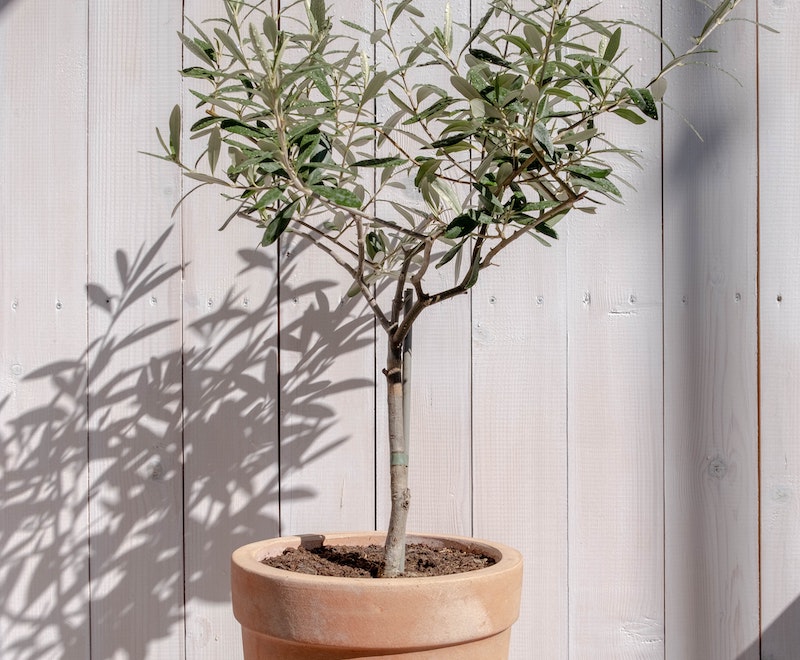
Looking for a true olive tree? Edible olives are Olea europaea. They can also grow successfully in large containers in sunny climates but require different care and cold protection than Elaeagnus.
8. Palo Verde
Palo verde trees are known for their green bark and branches, which contain chlorophyll and can photosynthesize even when the tree has few leaves.
Yellow flowers appear during the warm season and create a dramatic display.
Palo verde is adapted to hot, dry climates and requires full sun and exceptionally good drainage. Young trees or naturally smaller selections may be grown in very large containers, but many palo verde species eventually become substantial landscape trees and should not be considered permanent small-pot plants.
Some types also have thorns, which is worth considering when placing the container near walkways, seating areas, or entrances.
9. Privet
Privet can be trained as a shrub, hedge, or small tree and responds well to pruning, making it useful for formal container displays and privacy plantings.
Dense foliage works particularly well when several large pots are arranged together to divide an outdoor space.
Some privet species are invasive in parts of the United States. Check local recommendations before planting and choose approved sterile or non-invasive cultivars when available.
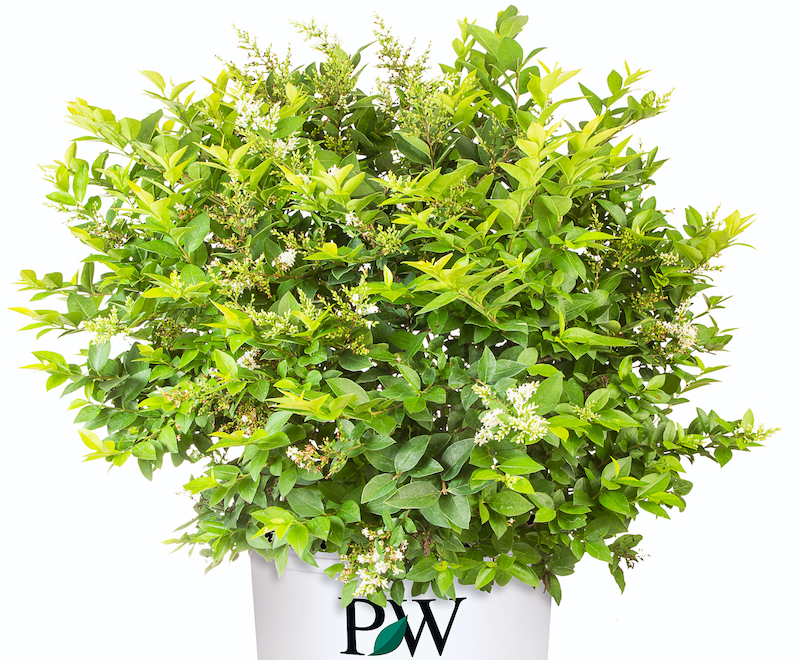
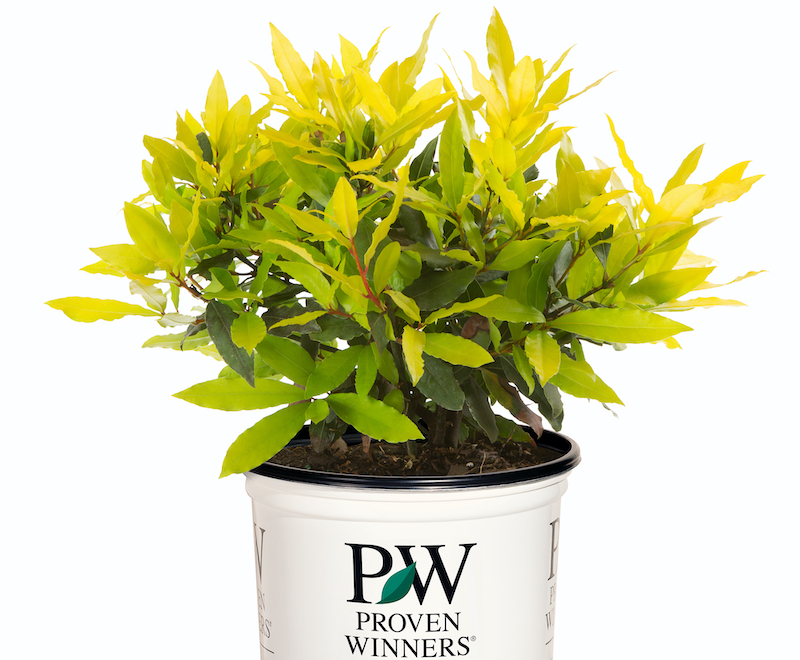
Golden Ticket Ligustrum, shown below, was selected for compact growth and reduced invasive potential compared with traditional privets.
10. Sweet Bay
Sweet bay, or bay laurel, is an evergreen tree or large shrub that adapts particularly well to container culture.
The aromatic mature leaves can be harvested and used as culinary bay leaves, while the plant itself can be pruned into a shrub, small tree, or formal topiary.
Sweet bay performs well in sun to partial shade and prefers well-drained growing media. Container plants should be protected from hard freezes in climates colder than their normal outdoor hardiness range.
Best Container Trees By Purpose
For Evergreen Color
Arborvitae, dwarf Alberta spruce, false cypress, Olive Martini Elaeagnus, and sweet bay.
For Narrow Spaces
Narrow arborvitae and Fine Line Buckthorn provide vertical structure without excessive width.
For Fall Color
Japanese maples offer some of the most dramatic seasonal foliage color.
For Edible Use
Dwarf citrus and sweet bay combine ornamental value with useful harvests.
Can Trees Stay In Planters Over Winter?
Some hardy trees and shrubs can remain outdoors in containers, but roots in pots are much more exposed to cold than roots growing in the ground.
A tree that is perfectly hardy when planted in the landscape may suffer root damage when the same winter temperatures reach all sides of a container.
A useful guideline is to choose woody plants that are hardy approximately two USDA zones colder than your location when you intend to overwinter them above ground in containers.
Larger containers provide better root insulation. Placing pots in sheltered locations, grouping them together, protecting containers from severe wind, and insulating the root zone can further improve winter survival.
Evergreens still need moisture in winter. Arborvitae, spruce, false cypress, and other evergreen container plants continue losing water through foliage. Make sure they enter winter adequately hydrated and check moisture during dry periods when the potting mix is not frozen.
Watering Trees In Containers
Trees growing in pots cannot draw moisture from surrounding garden soil, so they usually require more frequent moisture checks than established trees growing in the landscape.
Hot weather, direct sunlight, wind, small containers, and porous planter materials can all increase water loss.
Water thoroughly when the plant needs moisture and allow excess water to leave through the drainage holes. Avoid watering solely according to the calendar.
Learn more in Watering Plants In Containers .
Fertilizing Container-Grown Trees
Container trees have access only to the nutrients within their potting mix, but that does not mean every tree needs frequent fertilizer applications.
Check whether the potting mix already contains fertilizer and consider the nutritional needs of the particular tree. If supplemental fertilizer is appropriate, follow the product label rather than applying fertilizer on an automatic schedule.
Excessive fertilizer can damage roots and encourage weak or overly rapid growth.
See Fertilizing Plants In Containers for more information.
Drainage Is Essential For Potted Trees
Trees may remain in containers for years, making good drainage especially important.
Use a quality container potting mix and make sure the planter has unobstructed drainage holes. Do not add rocks beneath the root ball in an attempt to improve drainage.
For more detail, see our Ultimate Guide To Drainage For Potted Plants .
When Does A Container Tree Need Repotting?
Woody plants can eventually fill the available container with roots.
Signs that a tree may need attention include densely circling roots, roots growing through drainage holes, unusually rapid drying, reduced growth, or a tree that has become disproportionately large and unstable compared with its planter.
Depending on the species and your long-term goal, options include moving the tree to a somewhat larger container, root pruning when appropriate, or transplanting it into the landscape.
See How To Tell If A Plant Needs Repotted .
More Container Plant Guides
Sources
- Illinois Extension — Overwintering Potted Plants
- Illinois Extension — Trees And Shrubs In Containers
- University of Minnesota Extension — Growing Citrus Indoors
- University of Minnesota Extension — Japanese Maple
- North Carolina Extension — Dwarf Alberta Spruce
- North Carolina Extension — Sweet Bay