Plants growing in containers depend much more heavily on the gardener for water than plants growing in the ground. Their roots are confined to a limited amount of potting mix, which can dry quickly during hot, sunny, or windy weather.
The key is to keep the potting mix appropriately moist for the type of plant you are growing without leaving the roots constantly saturated. Container size, material, weather, plant size, sunlight, and drainage all influence how often watering is needed.
Container watering basics
- Check the potting mix instead of watering strictly by the calendar.
- Water thoroughly until excess water drains from the bottom.
- Small pots usually dry faster than large containers.
- Hot, sunny, and windy weather increases water use.
- Avoid leaving most plants sitting in soggy potting mix.
- Morning is generally the best time to water.
- Check hanging baskets and small containers especially often during summer.
How Do I Know When Potted Plants Need Water?
The most reliable method is to check the potting mix rather than waiting for the plant to wilt. Some plants wilt quickly when dry, while others show very little visible stress until the soil has been dry for quite a while.
For many common container plants that prefer evenly moist soil, insert your finger roughly 1 inch into the potting mix. If it feels dry at that depth, it is often time to water.
Plants such as succulents, cacti, and other drought-tolerant species may prefer the potting mix to dry more thoroughly between waterings, so always consider the needs of the particular plant.
Use The Weight Of The Pot
Small containers and hanging baskets can also be checked by lifting them. A freshly watered container will feel noticeably heavier than the same container after much of the water has been used or evaporated.
With a little practice, the weight of the container becomes a quick way to judge when watering is needed.
How Often Should You Water Potted Plants?
There is no universal watering schedule for container plants. Watering frequency changes with:
Container Size
Small pots usually dry faster than large ones.
Container Material
Clay and other porous pots lose moisture faster than many glazed or plastic containers.
Weather
Heat, sun, low humidity, and wind increase water loss.
Plant Size
Large, mature plants usually use water faster than small transplants.
During hot, dry summer weather, containers may need to be checked every day, and some small pots or hanging baskets may need watering more than once per day. University of Minnesota Extension notes that container plants may require watering more than once daily depending on container size and temperature.
During cool or cloudy weather, the same container may need water much less often. Rather than following a fixed spring, summer, or fall schedule, check the moisture level and water based on what the plant actually needs.
Can You Overwater Container Plants?
Yes. Most container plants prefer moist, well-aerated potting mix rather than constantly soggy soil. When the root zone stays saturated for too long, air is displaced from the potting mix and roots can decline.
Good drainage is just as important as watering frequency. Containers should have drainage holes, and those holes should not be blocked by a flat surface underneath the pot.
Pot feet, risers, or other supports can help when they keep drainage holes open and allow excess water to escape freely. However, raising the container does not compensate for a pot that has no drainage holes.
Watch saucers too. If a container sits in a saucer, empty standing water after irrigation unless the plant specifically prefers wet conditions. Most container plants should not remain with their roots submerged in water.
How Much Water Should You Use?
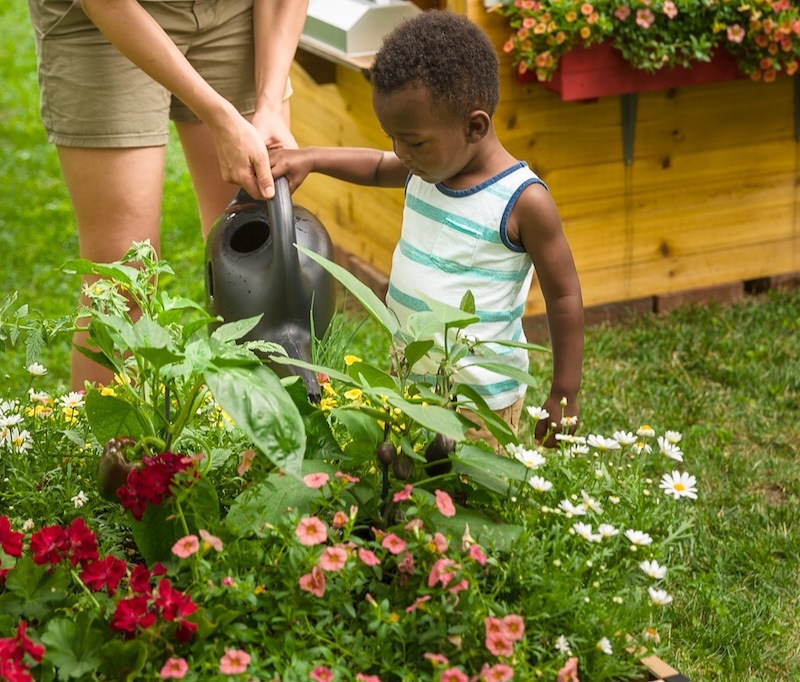
When you water a container, apply enough water to moisten the entire root zone. A good general approach is to water slowly until excess water begins draining from the bottom of the pot.
This helps ensure that water has moved through more than just the top layer of potting mix. It can also help flush excess soluble fertilizer salts from the container. Illinois Extension specifically recommends watering until water begins to drip from the drainage holes.
If water immediately runs out of the container while the center of the potting mix remains dry, the mix may have become excessively dry and difficult to rewet.
How To Rehydrate Very Dry Potting Mix
When potting mix becomes extremely dry, it may shrink away from the sides of the container. Water can then run through the gap around the edge instead of soaking evenly into the root zone.
To rehydrate a dry container:
- Apply water slowly rather than pouring a large amount all at once.
- Wait several minutes and water again.
- Repeat until the potting mix begins absorbing moisture evenly.
- For small containers, soaking the bottom of the pot in water temporarily can help dry potting mix absorb moisture through the drainage holes.
Illinois Extension recommends repeated watering or temporarily immersing a badly dried container until the growing medium becomes moist again.
What Is The Best Way To Water Potted Plants?
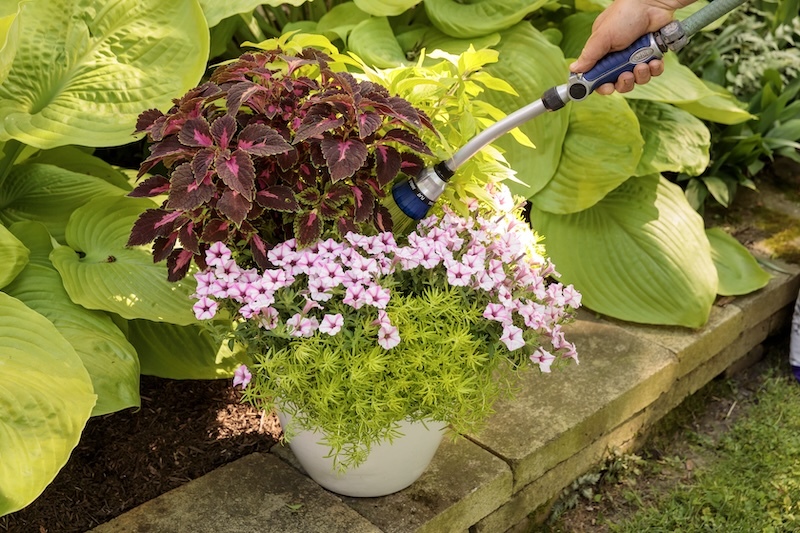
Apply water directly to the potting mix around the base of the plants. A watering wand, watering can, drip emitter, or similar low-pressure method makes it easier to water thoroughly without washing potting mix out of the container.
Morning is generally the best time to water outdoor containers because temperatures are cooler and plants have access to moisture before the hottest part of the day.
Watering later in the day is still better than allowing a plant to remain severely dry. If you do water in the evening, direct the water toward the potting mix rather than unnecessarily wetting leaves and flowers.
Drip Irrigation For Containers
If you have many containers grouped together, drip irrigation can save time and provide consistent watering. Individual emitters can be placed in each container and connected to a timer.
Even with an automatic system, check the containers periodically. Emitters can clog, plants may outgrow their previous water needs, and weather can change how quickly each pot dries.
Illinois Extension specifically recommends drip irrigation as a convenient option for larger groups of containers.
Do Outdoor Potted Plants Need Water In Winter?
Sometimes. Winter watering depends heavily on climate, the type of plant, whether the soil is frozen, and whether the container receives natural precipitation.
Dormant perennials, shrubs, and trees generally use much less water than they do during active growth, but their roots should not remain completely dry for extended periods.
Evergreens are particularly vulnerable to winter drying because they continue to lose moisture through their foliage. Illinois Extension recommends making sure container-grown perennials and evergreens are well watered before they are stored or protected for winter.
During winter, avoid watering frozen soil or adding water to a container that is already saturated. In milder climates, continue checking moisture normally and water when the plant and weather conditions require it.
Container Material Affects Watering
The material of the planter can significantly affect how quickly potting mix dries.
Unglazed terra-cotta and other porous materials allow moisture to evaporate through the walls of the pot, so plants in these containers may need more frequent watering.
Plastic, glazed ceramic, resin, and other nonporous materials generally lose less moisture through the sides of the container. Illinois Extension notes that porous containers lose water faster than nonporous materials.
Can You Mulch Container Plants?
Yes. A thin layer of mulch can help slow evaporation from the surface of larger containers and moderate soil temperature.
Mulch is especially useful in large outdoor planters that sit in full sun. Keep mulch away from the base of plant stems and do not apply such a thick layer that it interferes with watering.
University of Minnesota Extension recommends mulch as one way to reduce evaporation and moderate soil-surface temperature in containers.
Planter Watering Tips
- Check container moisture regularly instead of watering strictly by schedule.
- Small containers usually dry faster than large planters.
- Clay, fabric, and other porous containers can dry faster than plastic or glazed pots.
- Wind can dry container plants surprisingly quickly.
- Hot, sunny weather generally increases watering needs.
- Cool, cloudy, or humid weather usually slows moisture loss.
- Water until excess begins draining from the bottom of the container.
- Do not leave most container plants sitting in standing water.
- Check automatic drip systems periodically to make sure every container is receiving water.
Water and fertilizer work together in container gardens. Frequent watering can gradually leach nutrients from potting mix, so also see our guide to fertilizing plants in containers .
Sources
- University of Minnesota Extension — Fertilizing and Watering Container Plants
- Illinois Extension — Watering Container Gardens
- Illinois Extension — Six Tips for Watering Container Gardens
- Illinois Extension — Container Material Choices
- Illinois Extension — Container Drainage Options
- Penn State Extension — Watering to Beat the Summer Heat

Written By
Senior Gardening Writer at Plant Addicts
Published March 13, 2024 | Updated October 2, 2026