Perennials can bring years of flowers, foliage, texture, and seasonal interest to garden planters. They work especially well on patios, porches, balconies, and entryways where you want a container planting that lasts longer than a single growing season.
The best perennials for planters combine a manageable mature size with growing requirements that are practical in containers. Sunlight, moisture, planter size, drainage, and winter exposure all matter when deciding which perennial is right for your space.
What makes a perennial good for a planter?
- Its mature size fits the container and location.
- Its sunlight needs match the available exposure.
- Its moisture needs can be maintained consistently in a pot.
- Its root system has enough depth and volume to grow well.
- It tolerates the faster temperature changes common in containers.
- It has adequate cold hardiness if it will remain outdoors over winter.
- The planter has reliable drainage and enough size to protect the roots.
What Is A Perennial Plant?
A perennial is a plant that lives for more than two years. Some perennials remain evergreen or semi-evergreen, while others die back to the ground during winter and return from their roots in spring.
Some perennials live for many years, while others are naturally shorter-lived. A plant can also be perennial in a warm climate but behave like an annual where winter temperatures fall below its cold-hardiness range.
That distinction becomes even more important in containers because roots growing above ground experience colder temperatures than roots protected by garden soil.
Choosing Perennials For Planters
Start by choosing the plant for the conditions rather than choosing only by flower color.
Sunlight
Match full-sun plants with sunny locations and woodland plants with shade or filtered light.
Mature Size
Compact cultivars are generally easier to maintain in long-term containers.
Moisture
Combine plants that prefer similar moisture levels when creating mixed containers.
Winter Hardiness
Container-grown roots need more winter protection than the same plants in the ground.
1. Clematis
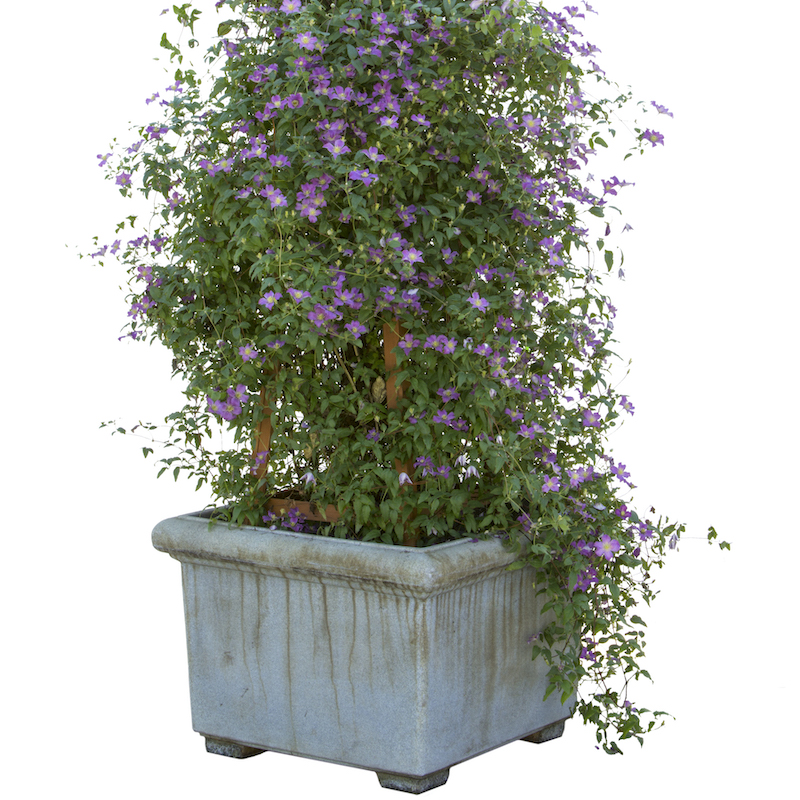
Clematis can make a dramatic vertical container plant when given a trellis or other sturdy support. Compact cultivars are usually easier to manage in pots than vigorous varieties that can grow many feet in a season.
Flower color, mature size, bloom time, pruning requirements, and fragrance vary by cultivar. Some clematis are fragrant, while many are grown primarily for their showy flowers.
Use a substantial container with good drainage and enough depth for the root system. Clematis generally appreciates consistent moisture without waterlogged soil.
2. Coral Bells
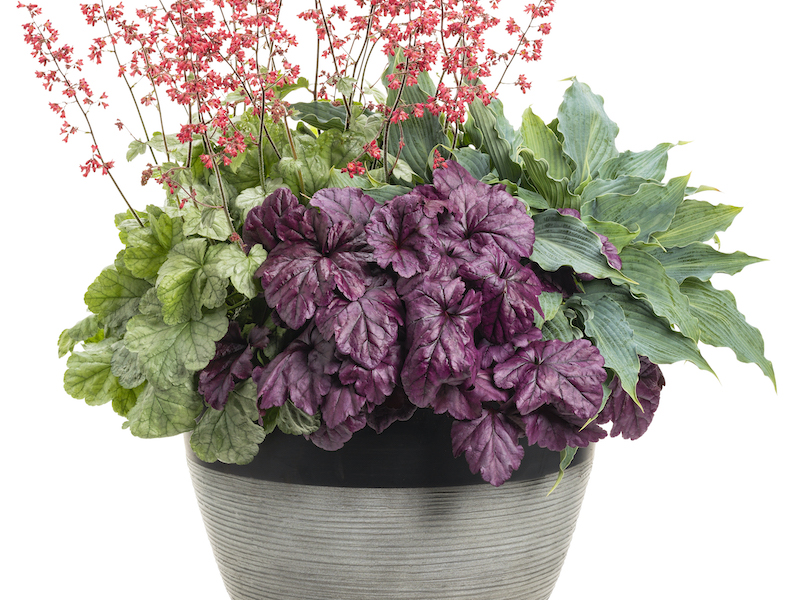
Coral bells, or Heuchera, are excellent container perennials because colorful foliage provides interest long after their small flowers fade.
Cultivars are available in green, chartreuse, caramel, silver, purple, burgundy, and nearly black shades. Their compact, mounded habit makes them useful as stand-alone plants or fillers in mixed containers.
Light requirements vary by cultivar. Many perform well in part shade, while some selections tolerate more sun when soil moisture remains adequate.
3. Foamflower
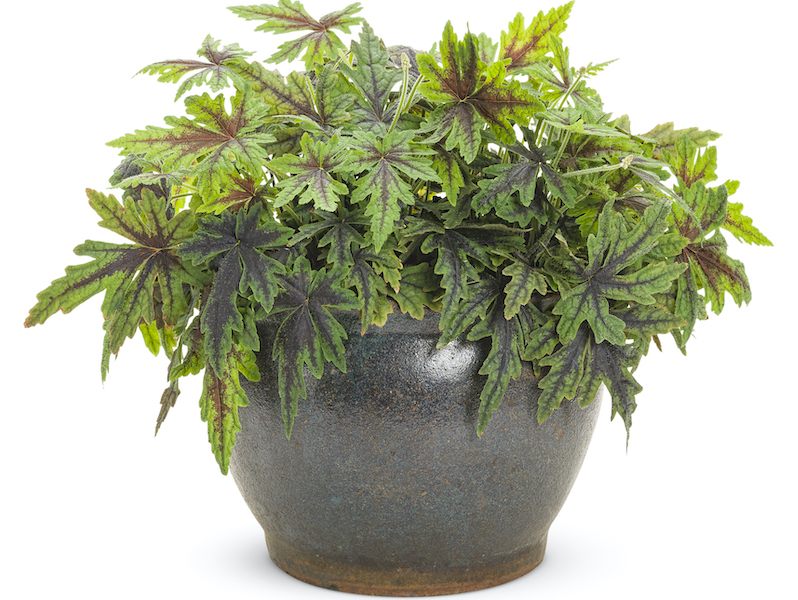
Foamflower, or Tiarella, is an excellent perennial for shaded containers. Its patterned foliage forms a compact mound, while airy spikes of white or pale flowers appear in spring.
Foamflower prefers partial to full shade and moist, well-drained growing conditions. It does not perform well when allowed to dry repeatedly.
Its modest size makes it particularly useful as a filler alongside hostas, ferns, coral bells, and other woodland-style container plants.
4. Creeping Jenny
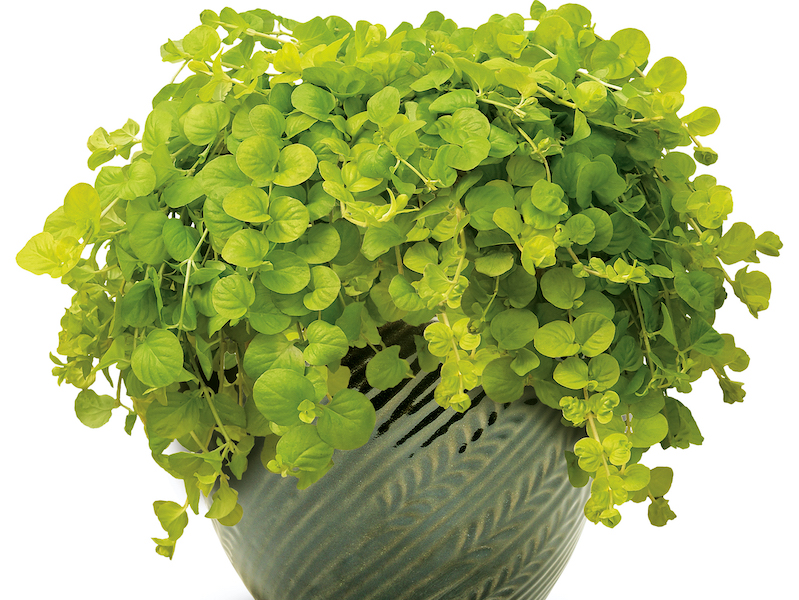
Creeping Jenny is a low-growing perennial with rounded foliage and long trailing stems that spill over the side of a planter.
Chartreuse selections such as Goldilocks are especially useful for adding bright contrast to mixed containers.
Creeping Jenny prefers consistent moisture and can root where its stems touch soil. It spreads aggressively and is considered invasive or problematic in some areas, so keeping it contained can be preferable to planting it in the landscape. Check local guidance before allowing it to escape into surrounding beds.
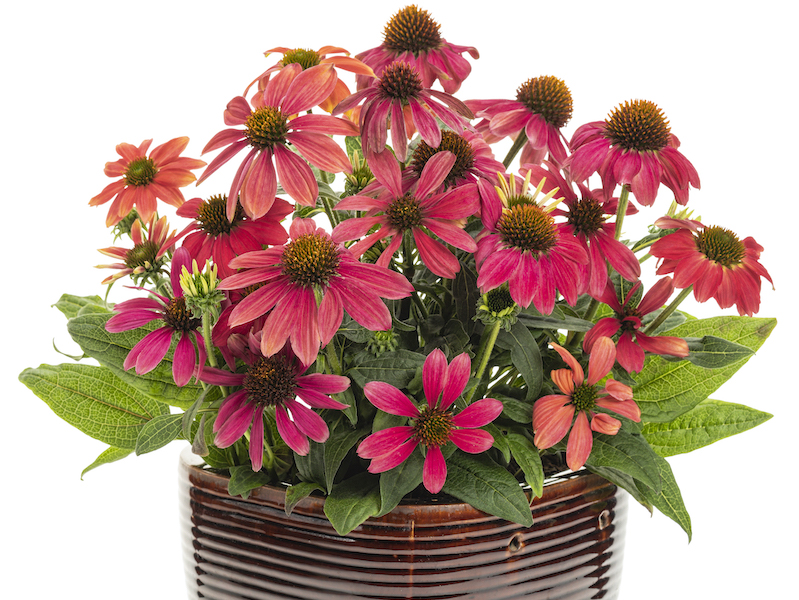
5. Coneflowers
Coneflowers, or Echinacea, are sunny-container perennials valued for colorful summer flowers and their ability to attract pollinators.
Compact cultivars are particularly useful for patio pots because they provide the same upright flowers without becoming excessively tall or top-heavy.
Give coneflowers plenty of sunlight, good drainage, and enough root space for long-term growth. Once established, they generally tolerate short dry periods better than plants that require consistently wet soil.
6. Lupine
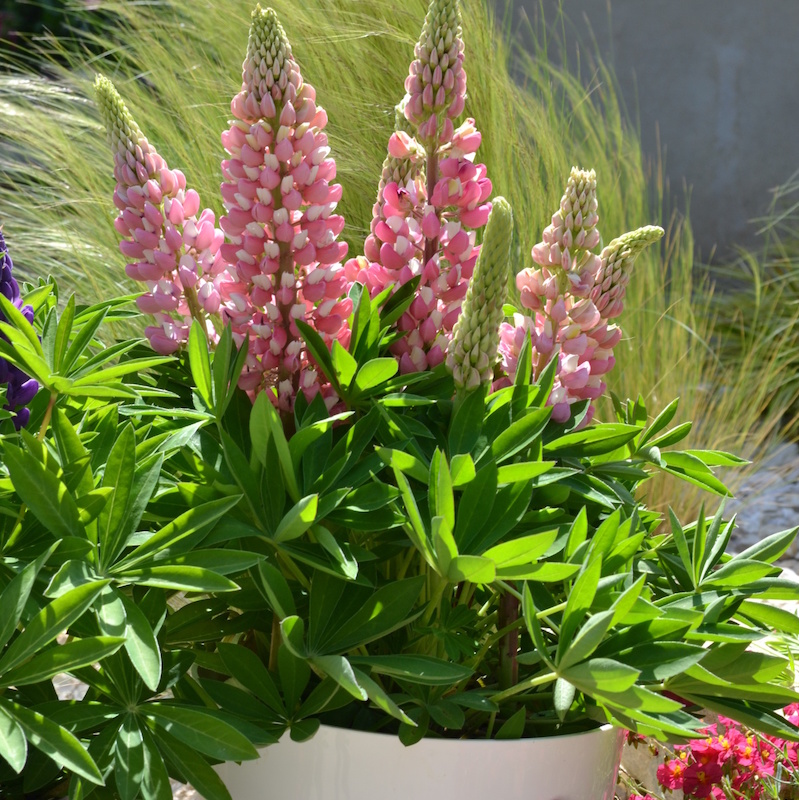
Lupines add dramatic vertical flower spikes to containers and are particularly attractive in spring and early summer displays.
Compact cultivars are better suited to pots than very tall forms. Lupines develop substantial root systems and dislike repeated root disturbance, so start with a sufficiently deep container rather than planning to repot frequently.
They generally perform best in cooler conditions with good drainage. In hot, humid climates they can be shorter-lived than many other perennials.
7. Ferns
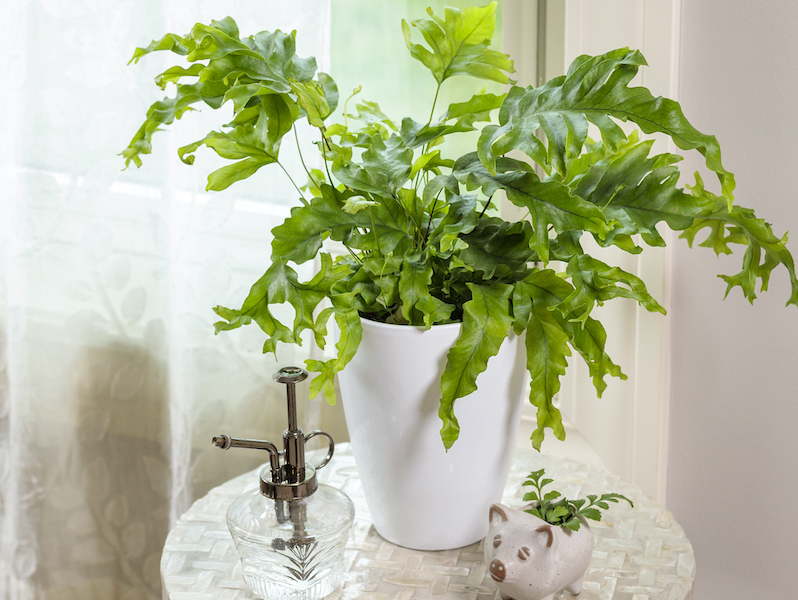
Ferns bring fine texture and lush foliage to shaded containers. They work especially well on covered porches, shady patios, and north- or east-facing areas.
Root habits and moisture requirements vary by fern species, so do not assume every fern needs the same container depth or watering schedule. Many garden ferns appreciate consistent moisture and protection from intense afternoon sun.
Ferns can be used alone for a simple foliage display or combined with shade-loving plants such as hostas, foamflower, and coral bells.
8. Hellebores
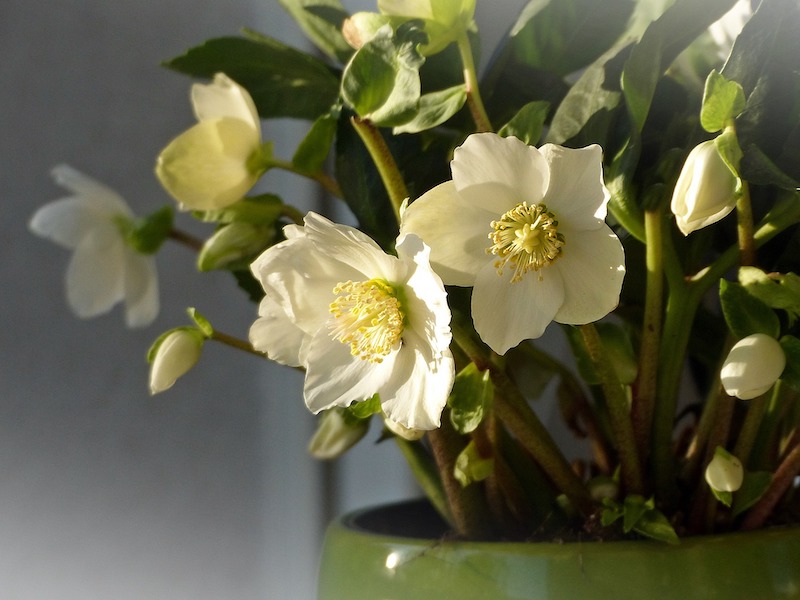
Hellebores, often called Lenten roses, are valuable container perennials because they bloom during late winter or early spring when relatively few other plants are flowering.
Their leathery foliage remains attractive for a long season, and flowers range from white and pale pink to burgundy, purple, and near-black.
Hellebores generally prefer partial shade and rich, well-drained growing conditions. Give them enough container depth for their root systems and avoid repeatedly disturbing established plants.
9. Ornamental Grasses
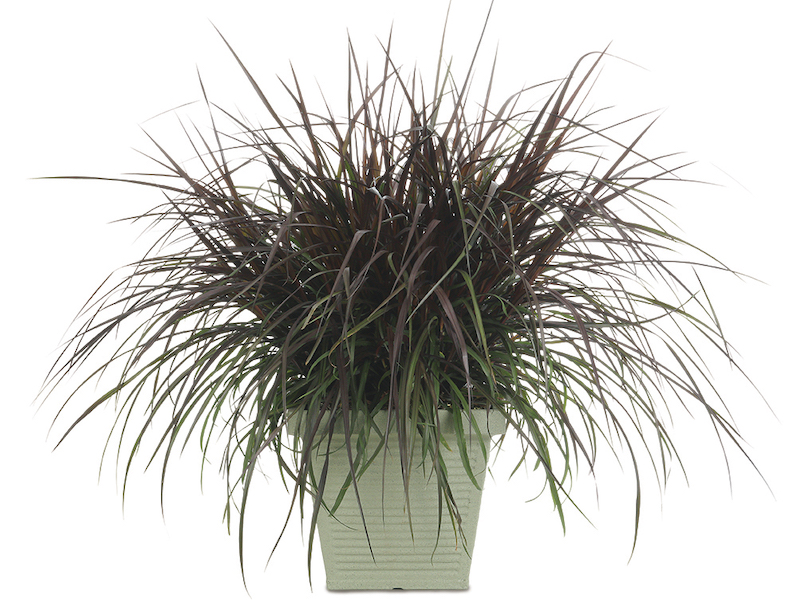
Hardy perennial ornamental grasses can add height, movement, texture, and winter interest to containers.
Compact fountain grasses, sedges, switchgrass cultivars, and other manageable selections can work well in large planters. Choose the exact grass carefully because mature size, moisture preference, hardiness, and growth habit vary considerably.
Some ornamental grasses sold for containers are tender perennials or annuals in colder regions, so check the growing zone before assuming the plant will return the following spring.
Growing Ornamental Grass In Pots
10. Bee Balm
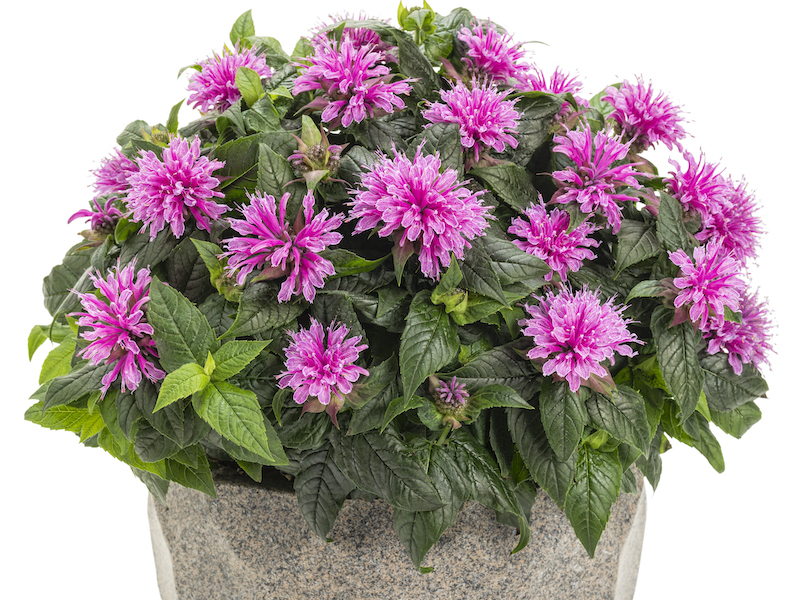
Bee balm, or Monarda, produces distinctive flowers that attract bees, butterflies, and hummingbirds.
Mature size varies significantly. Compact cultivars can remain relatively short and work well in containers, while many traditional bee balms grow 2 to 4 feet tall or more.
Look for compact, mildew-resistant cultivars for container use. Good air circulation is helpful because bee balm can be susceptible to powdery mildew, particularly when foliage remains crowded or humid.
Most types grow best with plenty of sun and consistent moisture in well-drained soil.
Best Perennials For Planters By Use
For Sun
Coneflower, bee balm, lupine, and many perennial ornamental grasses.
For Shade
Coral bells, foamflower, ferns, and hellebores.
For Pollinators
Coneflower, bee balm, foamflower, lupine, and flowering clematis.
For Trailing Growth
Creeping Jenny creates a strong spiller effect along planter edges.
Combining Perennials In One Planter
Perennials can be mixed just like annual container plants, but compatibility is more important than the traditional thriller, filler, spiller formula.
Plants sharing a container should have similar sunlight, moisture, soil, and fertilizer requirements.
For example, coral bells, foamflower, and ferns can make a good woodland-style combination because their growing requirements overlap. A drought-tolerant coneflower would be a poor long-term companion for moisture-loving foamflower.
Choose A Large Enough Planter
A perennial may live in the same container for several years, so root space matters more than it does with a seasonal annual display.
Larger containers also hold moisture more evenly and provide better winter insulation than small pots.
Make sure the container has adequate drainage and is stable enough for the mature height of the plant.
For help matching the container to the plant, see Choosing Planter Sizes .
Can Perennials Stay In Pots Over Winter?
Hardy perennials can sometimes remain in planters year-round, but being winter hardy in the landscape does not guarantee that the same plant will survive in an exposed container.
Garden soil provides substantial insulation around roots. A container exposes the root system to colder temperatures and faster temperature swings.
A useful guideline when overwintering perennials outdoors in containers is to choose plants that are hardy approximately two USDA zones colder than your location.
Larger containers provide more protection than small pots. Other options include grouping containers in a sheltered location, insulating them, sinking pots into the ground, or moving dormant hardy perennials into an unheated garage or shed where temperatures remain appropriately cold without exposing the roots to severe weather.
Do not automatically bring hardy perennials into a warm house for winter. Many need a period of cold dormancy. Tender perennials and tropical plants require different overwintering methods than cold-hardy garden perennials.
Watering Perennials In Containers
Container-grown perennials need more frequent moisture checks than the same plants growing in garden soil.
Small pots, porous containers, sunny locations, and windy conditions all increase moisture loss.
Water according to the needs of the individual plant rather than following a fixed schedule. Apply enough water to moisten the root zone and allow excess water to leave through the drainage holes.
Learn more in Watering Plants In Containers .
Good Drainage Is Essential
Perennials may remain in the same container for several seasons, so poorly draining growing media can become a long-term problem.
Use quality container potting mix and make sure drainage holes remain open. Avoid putting gravel beneath the potting mix as a substitute for proper drainage.
See our Ultimate Guide To Drainage For Potted Plants for more detail.
More Container Plant Guides
Sources
- Illinois Extension — Overwintering Plants In Containers
- Illinois Extension — Overwintering Potted Plants
- North Carolina Extension — Foamflower
- North Carolina Extension — Creeping Jenny
- North Carolina Extension — Bee Balm
- North Carolina Extension — Ornamental Grasses