
Plants growing in containers usually need more regular fertilizing than plants growing in the ground. Their roots are limited to a relatively small amount of potting mix, and repeated watering can gradually leach nutrients out through the drainage holes.
The right fertilizer schedule depends on the plant, the potting mix, the type of fertilizer, how often you water, and how actively the plant is growing. The goal is to provide steady nutrition without overfeeding.
Container fertilizing basics
- Use an all-purpose fertilizer as a good starting point for most containers.
- Slow-release fertilizer provides nutrients gradually over time.
- Water-soluble fertilizer supplies nutrients quickly and is useful during active growth.
- Follow the fertilizer label rather than assuming more is better.
- Avoid fertilizing severely drought-stressed, heat-stressed, or dormant plants.
- Frequent watering may increase the need for nutrient replacement.
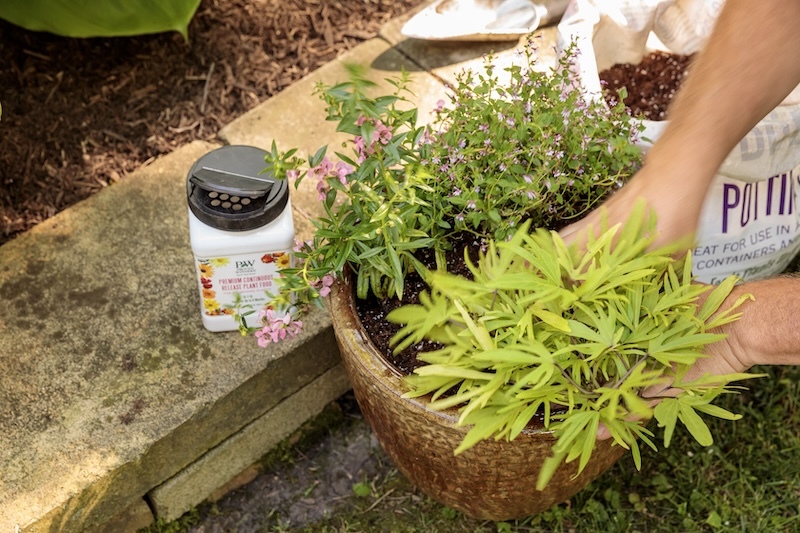
Why Do Potted Plants Need Fertilizer?
Container plants have access only to the nutrients contained within the pot. Unlike plants growing in the ground, their roots cannot expand outward into surrounding soil to find additional nutrients.
Watering also moves nutrients through the potting mix and out of the drainage holes. The more frequently a container is watered, the faster some nutrients may be lost.
University of Minnesota Extension recommends beginning regular fertilizer applications roughly 2 to 6 weeks after planting, depending on the potting mix, watering schedule, fertilizer already present in the mix, and rate of plant growth.
Slow-Release vs. Water-Soluble Fertilizer
Both types can work well in containers. The best choice depends on how much maintenance you want to do and how quickly the plant needs nutrients.
Slow-Release Fertilizer
Slow-release or controlled-release fertilizer releases small amounts of nutrients gradually as the product is exposed to moisture. Depending on the formulation, one application may feed plants for several months. These products are useful for gardeners who want a lower-maintenance feeding schedule.
Water-Soluble Fertilizer
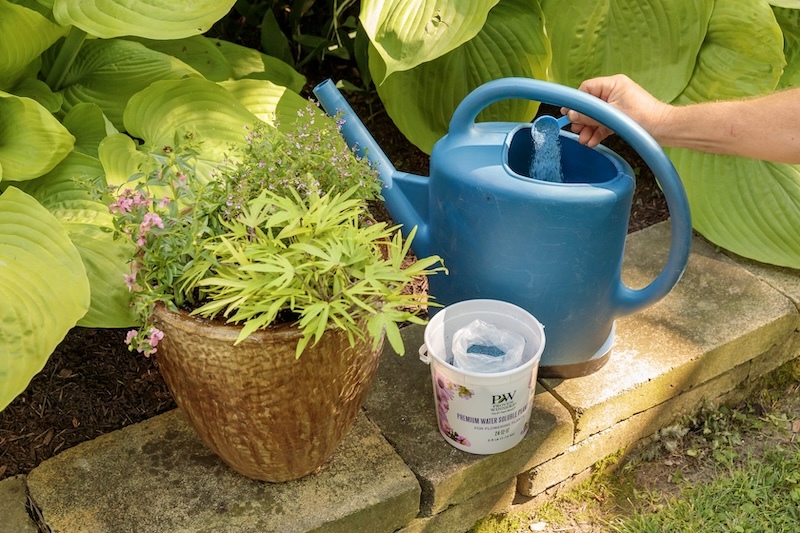
Water-soluble fertilizer is mixed with water and provides nutrients that are quickly available to plants. It works especially well for fast-growing annuals, vegetables, and other containers that are watered frequently.
How To Apply Fertilizer To Potted Plants
Always follow the fertilizer label for application rate and frequency. Products vary widely in concentration, so one brand's directions may be very different from another's.
Water-soluble fertilizers are usually diluted in water and applied during normal watering. Illinois Extension notes that applying liquid fertilizer about every two weeks is adequate for many containers, while lower-strength fertilizer can also be used more frequently.
Slow-release products may be mixed into the potting mix at planting time or sprinkled over the surface depending on the product instructions.
Do not fertilize bone-dry potting mix. Water very dry containers first, then fertilize after the potting mix has been moistened. Applying concentrated fertilizer to dry roots increases the risk of fertilizer injury.
How Often Should You Fertilize Container Plants?
There is no single schedule that works for every container. How often you fertilize depends on the fertilizer formulation, the plant's growth rate, the potting mix, container size, and watering frequency.
Annual Flowers
Fast-growing annuals often benefit from regular feeding throughout the growing season.
Vegetables & Herbs
Productive container crops may need frequent nutrient replacement, especially when watered heavily.
Perennials
Fertilizer needs vary considerably by plant. Avoid feeding simply on a calendar if growth is already healthy.
Shrubs & Trees
Woody container plants generally need less frequent feeding than fast-growing annuals and vegetables.
If your potting mix already contains slow-release fertilizer, you may not need to begin supplemental feeding immediately. Check the potting-mix label before adding more.
When To Fertilize Potted Plants
Fertilize container plants primarily while they are actively growing. Outdoor annuals, vegetables, perennials, shrubs, and trees generally use nutrients most actively during their normal growing season.
Plants growing slowly because of cold weather, extreme heat, drought stress, transplant stress, or dormancy generally do not need the same amount of fertilizer as plants in active growth.
Avoid relying on a strict temperature cutoff such as 50°F or 95°F for every plant. Different species respond differently to temperature. Instead, look at the plant's growth and overall condition.
If a plant is wilted from dry soil or suffering during extreme heat, correct the moisture or temperature stress first and wait until the plant has stabilized before fertilizing.
What Is The Best Fertilizer For Potted Plants?
For most mixed container gardens, an all-purpose fertilizer is a good starting point. These fertilizers generally contain nitrogen, phosphorus, potassium, and often additional plant nutrients.
The three numbers on a fertilizer package represent the percentage by weight of nitrogen, phosphate, and potash, commonly referred to as the fertilizer's N-P-K analysis.
N
Nitrogen
Supports leafy, vegetative growth.
P
Phosphorus
Plays a role in root development, flowering, and plant energy processes.
K
Potassium
Supports overall plant function, stress tolerance, and growth.
Plants grown primarily for foliage often perform well with an all-purpose fertilizer. Flowering and fruiting containers may benefit from fertilizers formulated with proportionally less nitrogen and relatively more phosphorus or potassium.
There is no single ideal N-P-K ratio for all flowering plants, so follow the needs of the plant and the fertilizer manufacturer's recommendations rather than looking for one universal ratio.
Signs A Container Plant May Need Fertilizer
Nutrient deficiencies can cause symptoms, but many of the same symptoms can also result from watering problems, root damage, poor drainage, pests, disease, or inadequate light.
Possible signs of nutrient deficiency include:
- Pale or yellowing foliage
- Weak or unusually slow growth
- Smaller-than-normal leaves
- Reduced flowering or fruiting
- Older leaves declining prematurely
Before adding extra fertilizer, check soil moisture, drainage, light, and the plant's general health. Fertilizer will not correct a plant that is struggling because its roots are waterlogged or its container is too small.
Can You Over-Fertilize Potted Plants?
Yes. Because container roots are confined to a relatively small volume of potting mix, excess fertilizer salts can build up and damage roots.
Symptoms of excessive fertilizer may include brown leaf tips or margins, wilting despite moist soil, slowed growth, or a visible white crust of mineral salts on the soil surface or container.
The easiest way to avoid this problem is to measure fertilizer carefully and follow label directions. More fertilizer does not make plants grow faster.
Container Fertilizing Tips
- Check whether your potting mix already contains fertilizer before adding more.
- Always follow the manufacturer's application rate and schedule.
- Apply liquid fertilizer to moist potting mix rather than completely dry soil.
- Slow-release fertilizer is useful when you want fewer scheduled applications.
- Frequent watering can increase nutrient loss from containers.
- Fast-growing annuals and vegetables generally need more nutrients than slow-growing woody plants.
- Avoid fertilizing severely stressed or dormant plants.
- Do not assume poor growth always means the plant needs more fertilizer.
Container plants need the right balance of water and nutrients. For more tips on keeping potting mix evenly moist, see our guide to watering plants in containers .
Sources
- University of Minnesota Extension — Fertilizing and Watering Container Plants
- University of Minnesota Extension — Starting Your Garden and Containers Off Right
- Illinois Extension — Fertilizing Container Gardens
- Illinois Extension — Helpful Tips for Creating a Successful Container Garden
- Penn State Extension — Container Vegetable Gardening: Four Keys to Success

Written By
Senior Gardening Writer at Plant Addicts
Published April 13, 2024 | Updated October 2, 2026