Shrubs can give garden planters structure, height, flowers, colorful foliage, fragrance, and even year-round interest. Compact shrubs work especially well near entryways, on patios, beside garage doors, or anywhere you want a container planting with more permanence than seasonal annuals.
The best shrubs for containers stay reasonably compact, tolerate life in a restricted root zone, and match the sunlight and moisture available in the location. Container size, drainage, winter exposure, and mature shrub size are just as important as flower color or foliage.
What makes a shrub good for a planter?
- Compact or dwarf mature size
- A growth habit that remains proportional to the container
- Good performance in your available sun or shade
- Moisture needs that can be managed in a container
- Enough cold hardiness if the shrub will remain outdoors through winter
- A planter large and stable enough for the mature plant
- Reliable drainage so roots do not remain waterlogged
How To Choose A Shrub For A Planter
Mature size should be one of the first things you consider. The word dwarf does not mean a shrub will always stay under 2 feet tall. Some dwarf cultivars remain very small, while others may eventually reach 3, 4, 5 feet, or more.
Look at the expected mature height and width of the exact cultivar rather than relying only on the plant category.
Mature Size
Compact cultivars are easier to maintain and less likely to overwhelm a container.
Sunlight
Match the shrub to the amount of direct sun the planter actually receives.
Water Needs
Container-grown shrubs usually need closer moisture monitoring than in-ground plants.
Winter Exposure
Roots in containers are more exposed to cold than roots growing in the ground.
Use A Large, Stable Container
Shrubs are long-term container plants, so give them enough root volume for continued growth. Larger containers also dry more slowly and offer more insulation around roots than small pots.
Tall shrubs can become top-heavy in wind. Choose a broad, stable planter and consider its total weight after potting mix, the shrub, and water are added.
Heavy ceramic, concrete, stone, wood, resin, or fiberglass containers can all work depending on your climate and whether the planter needs to be moved. If the shrub will remain outdoors through freezing weather, make sure the container itself is rated for year-round freeze-thaw exposure.
For help choosing the container itself, see Choosing The Right Planter For Your Plants .
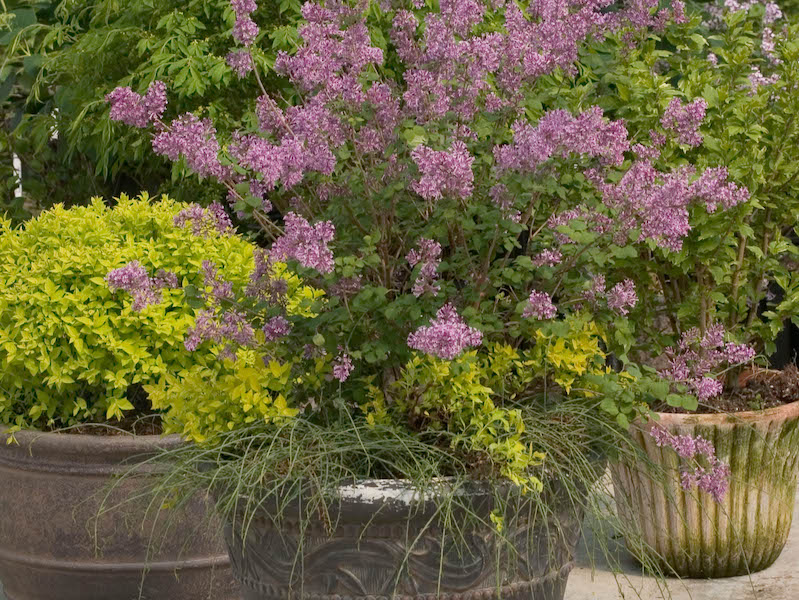
1. Lilacs
Compact lilacs are excellent container shrubs for gardeners who want fragrant spring flowers. Dwarf and compact cultivars are generally much easier to maintain in pots than full-size traditional lilacs, which can eventually become too large for most patio containers.
Lilacs flower best with plenty of sun and good drainage. Reblooming selections such as Bloomerang varieties can produce a strong spring bloom followed by additional flowers later in the season.
2. Gardenias
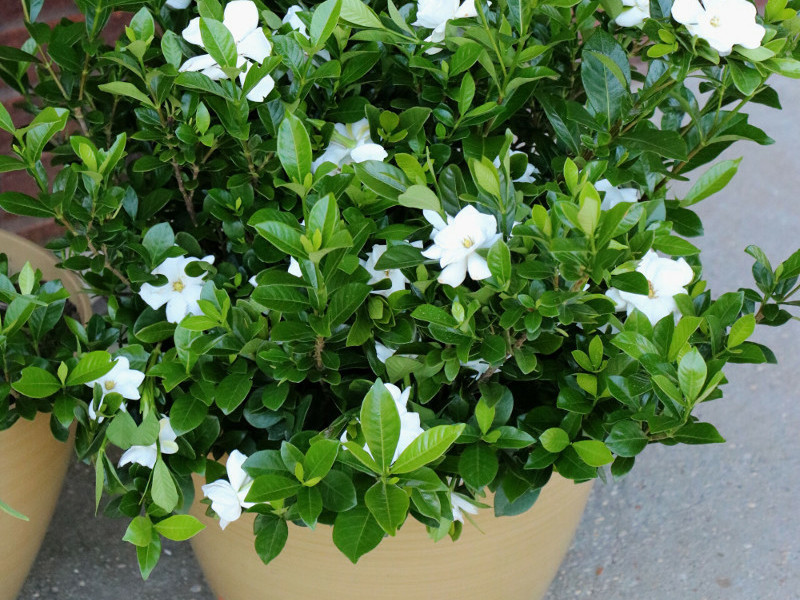
Gardenias are popular container shrubs because their intensely fragrant white flowers can be positioned near a porch, patio, doorway, or seating area where the fragrance can be enjoyed.
Smaller cultivars are particularly well suited to containers. Gardenias prefer acidic, moist but well-drained growing media and generally perform best with morning sun and some protection from intense afternoon heat in warm climates.
Gardenias require more attention than some shrubs on this list, particularly when it comes to moisture, nutrition, temperature, and soil pH.
3. Loropetalum
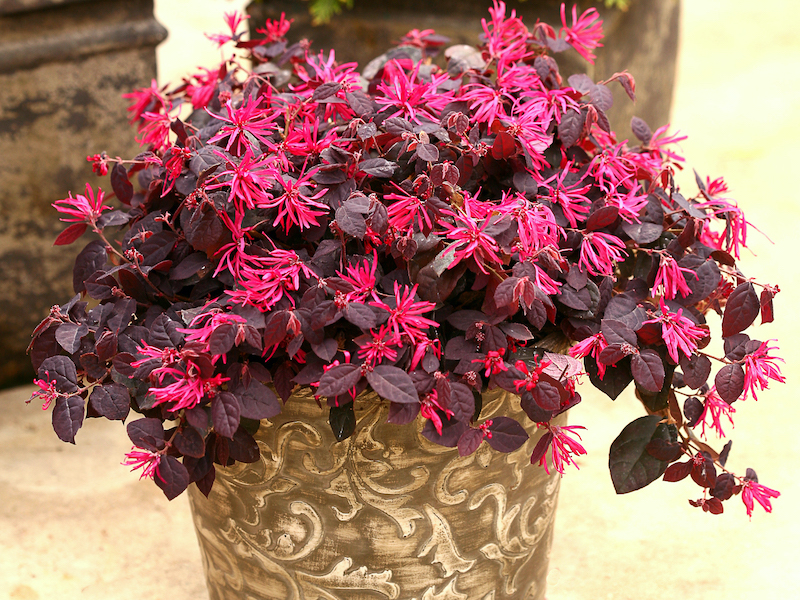
Compact loropetalum cultivars bring rich burgundy, purple, or green foliage to containers along with fringe-like pink or white flowers.
Mature size varies considerably, so smaller cultivars such as Jazz Hands selections are generally better container candidates than full-size landscape types.
Loropetalum is evergreen or semi-evergreen in climates where winters remain mild, but foliage retention and winter survival depend on the cultivar and growing zone.
4. Hollies
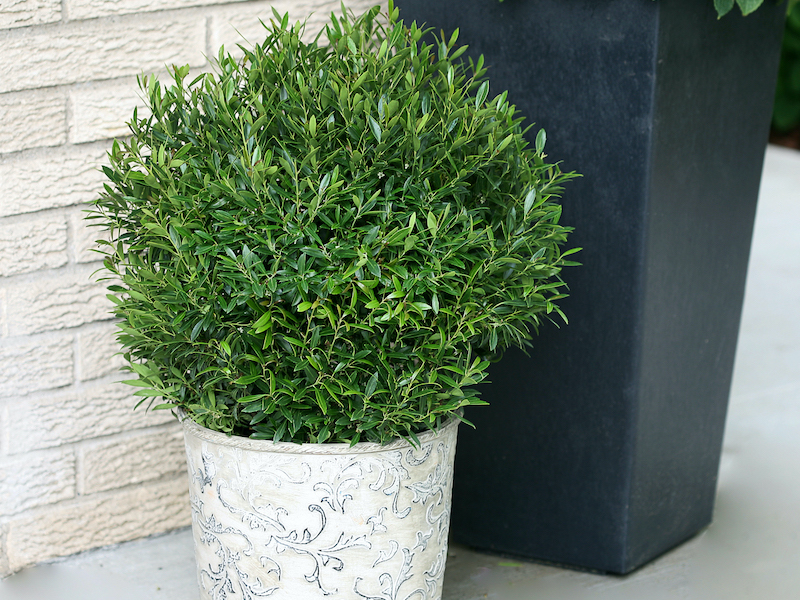
Compact hollies are useful when you want year-round structure from a container. Depending on the species and cultivar, foliage can range from traditional glossy holly leaves to smaller boxwood-like leaves.
Inkberry hollies such as Gem Box are particularly attractive container shrubs because of their compact habit and evergreen foliage.
If berries are important, check the requirements of the specific holly. Many hollies have separate male and female plants, and a compatible male may be needed nearby for a female plant to produce fruit.
Deer resistance also varies by species, cultivar, local deer pressure, and available food, so hollies should not be treated as completely deer-proof.
5. Hydrangeas
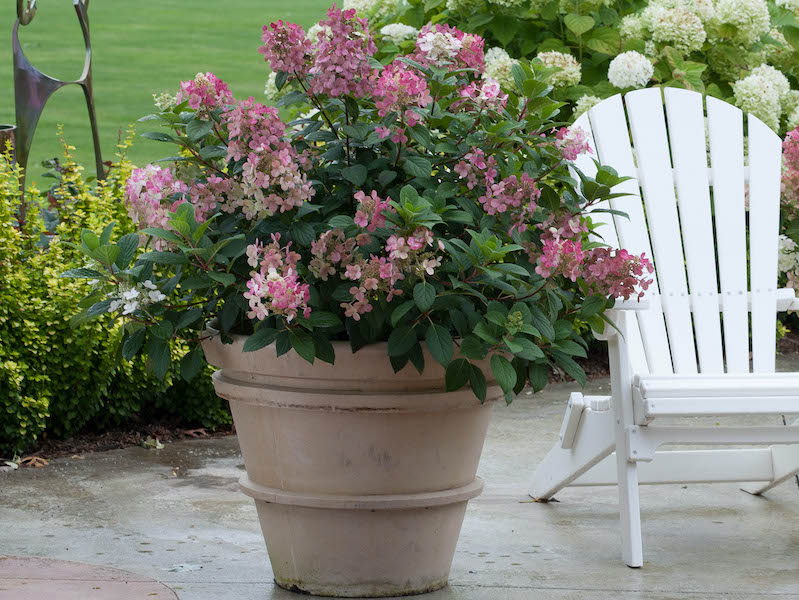
Hydrangeas are among the most popular flowering shrubs for large containers. Compact cultivars can produce impressive displays of flowers without reaching the size of traditional landscape hydrangeas.
Mature sizes vary widely by species and cultivar, so choose the plant first and size the container around its expected growth rather than assuming all hydrangeas remain 2 to 3 feet tall.
Container-grown hydrangeas require consistent moisture, especially during warm weather when their large leaves can lose water quickly.
6. Arborvitae
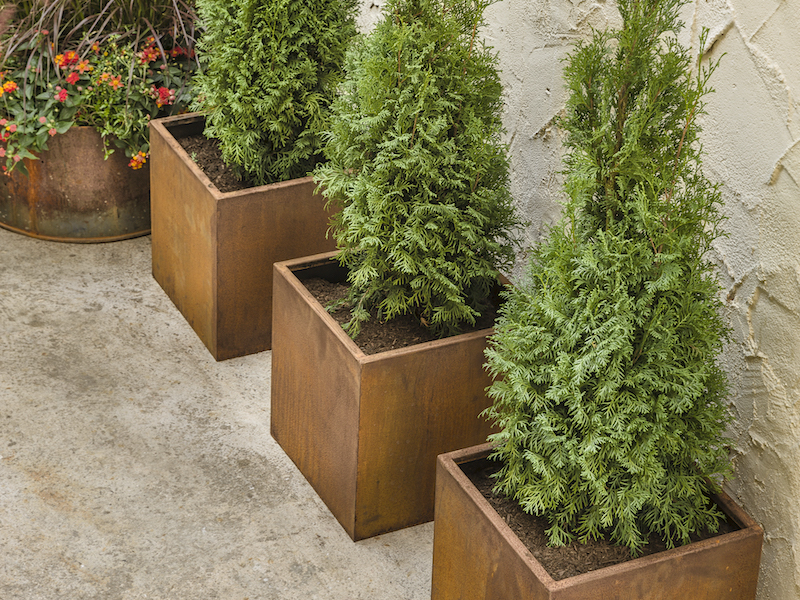
Compact arborvitae provide year-round evergreen foliage and can be useful for screening, framing an entrance, or adding vertical structure to a patio.
Arborvitae vary significantly in mature size and shape. Some cultivars are narrow and upright, while others are rounded or broad. Choose compact cultivars specifically suited to the available space rather than assuming all arborvitae remain narrow.
Evergreen foliage continues losing moisture during winter, so container-grown arborvitae should enter winter well hydrated and may need moisture monitored during dry periods when the growing medium is not frozen.
7. Elderberry
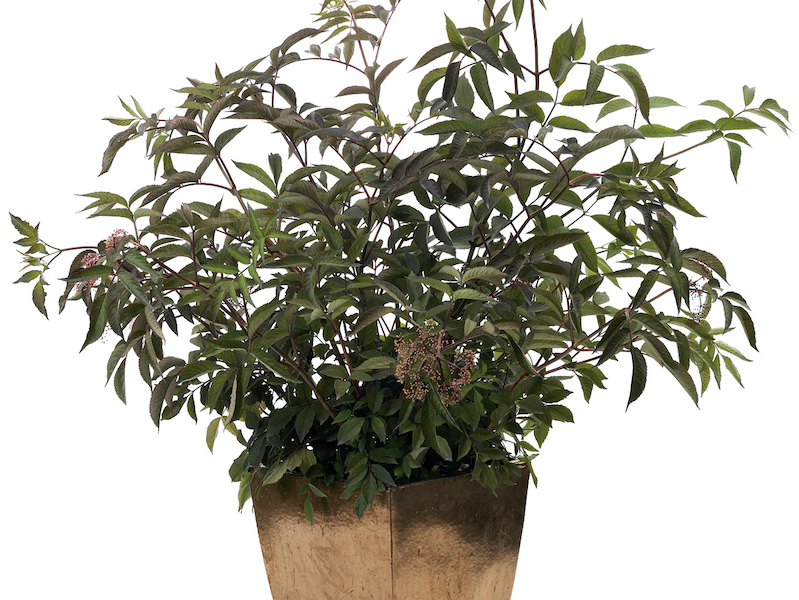
Elderberries can make dramatic container specimens because of their colorful foliage, large flower clusters, and vigorous growth.
Dark-leaved cultivars such as Black Beauty are particularly striking in large planters. However, elderberries can grow quickly and many become substantial shrubs, so they require a large container and may eventually outgrow patio culture.
If fruit production is one of your goals, check the pollination requirements of the particular elderberry. Many cultivars produce better crops when another compatible elderberry cultivar is growing nearby.
8. Spirea
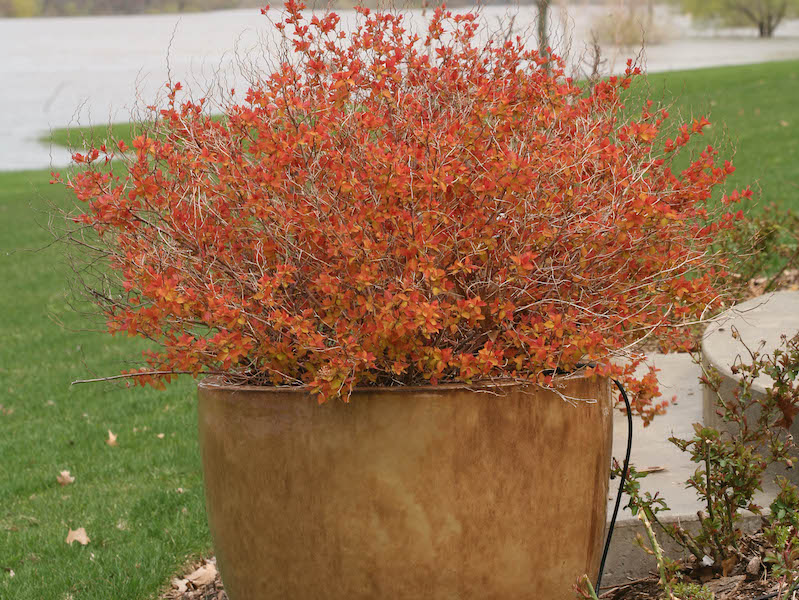
Compact spirea cultivars are excellent low-maintenance container shrubs for sunny locations.
Depending on the variety, foliage may emerge in shades of yellow, orange, red, or green before developing its mature summer color. Clusters of flowers add another layer of seasonal interest and attract pollinators.
Their naturally mounded habit makes smaller spireas particularly easy to fit into patio and entryway containers.
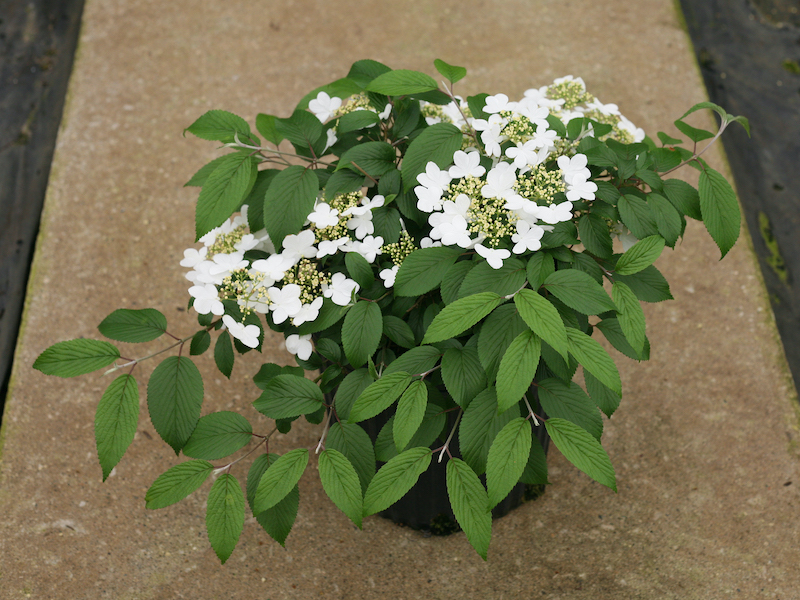
9. Viburnum
Compact viburnums can bring flowers, foliage, fall color, and sometimes ornamental fruit to large containers.
The genus includes shrubs with very different mature sizes, habits, flower fragrance, leaf color, and fruit characteristics. Compact selections such as Wabi-Sabi doublefile viburnum make much more practical container specimens than large landscape varieties.
If berries are an important feature, research the exact cultivar before planting. Many viburnums produce their best fruit set when a compatible second plant is available for cross-pollination.
10. Butterfly Bushes
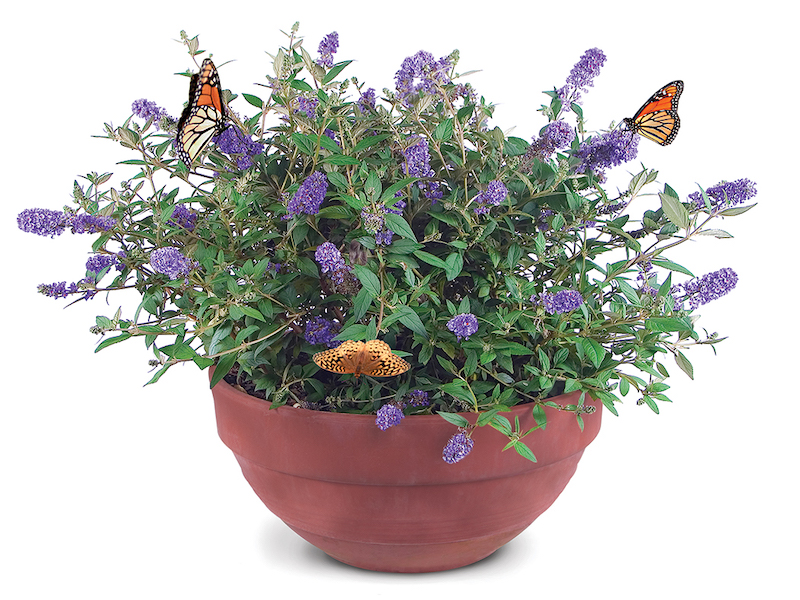
Compact butterfly bush cultivars are excellent sunny-container shrubs when you want long-lasting flowers and pollinator activity.
Dwarf selections such as Lo & Behold types stay much more manageable in containers than traditional butterfly bushes.
Flower clusters attract butterflies and other pollinators during summer. Give the plant full sun, good drainage, and enough container volume for vigorous root growth.
Butterfly bush can be invasive in some regions, so check local recommendations and restrictions. Where invasiveness is a concern, choose approved sterile or low-seed cultivars when available.
Growing Butterfly Bushes In Pots
Best Container Shrubs By Purpose
For Fragrance
Lilac and gardenia offer some of the most noticeable fragrance near patios and entrances.
For Flowers
Hydrangea, butterfly bush, lilac, spirea, and gardenia provide showy seasonal blooms.
For Foliage
Loropetalum, elderberry, holly, and arborvitae offer strong foliage interest.
For Pollinators
Butterfly bush, spirea, viburnum, and lilac can provide valuable flowers for visiting pollinators.
Can Shrubs Stay In Planters Over Winter?
Many hardy shrubs can remain in containers over winter, but a shrub that is hardy in the landscape is not automatically equally hardy in a pot.
Roots growing in containers are exposed to colder temperatures and more frequent freeze-thaw cycles because they do not have the insulation of surrounding ground.
Illinois Extension recommends choosing plants substantially hardier than your local zone when they will overwinter above ground in containers. A commonly used guideline is to select a plant hardy approximately two zones colder than your location.
Large containers provide better root insulation than small ones. Grouping pots together, placing them in protected areas, insulating the container, or temporarily sinking containers into the ground can further improve winter survival.
Evergreens need special attention. Hollies and arborvitae continue losing moisture through their foliage during winter. Make sure they enter winter adequately hydrated and monitor moisture during mild, dry periods when the potting mix is not frozen.
Drainage Is Essential For Potted Shrubs
Shrubs may remain in the same container for several years, making reliable drainage especially important.
Use a quality container potting mix and make sure excess water can leave through unobstructed drainage holes. Do not add gravel beneath the root ball in an attempt to improve drainage.
For more information, see our Ultimate Guide To Drainage For Potted Plants .
Watering Shrubs In Containers
Potted shrubs generally need more frequent moisture checks than the same plants growing in the landscape.
Container size, material, sunlight, wind, temperature, and the shrub itself all affect how quickly the growing medium dries.
Water thoroughly when the plant needs moisture and allow excess water to drain. Avoid relying on a rigid calendar schedule.
See Watering Plants In Containers for more detail.
When Does A Potted Shrub Need A Larger Container?
Shrubs can eventually become root-bound even when they started in an appropriately sized planter.
Possible signs include roots densely circling the root ball, roots growing through drainage holes, the container drying much more rapidly than it used to, or the shrub becoming unstable in relation to the pot.
When repotting becomes necessary, move into a somewhat larger container rather than dramatically increasing the pot size all at once.
Learn more in How To Tell If A Plant Needs Repotted .
More Container Plant Guides
Sources
- Illinois Extension — Container Size
- Illinois Extension — Overwintering Plants In Containers
- Illinois Extension — Winterizing Container-Grown Trees And Shrubs
- Clemson Cooperative Extension — Gardenia
- University of Minnesota Extension — Trees And Shrubs