Choosing the right planter size is important for healthy root growth, consistent watering, and keeping the plant stable as it grows. The best container is large enough to give roots room to develop without surrounding a small root system with far more wet potting mix than it can use.
Root-ball size is a useful starting point, but it is not the only consideration. Mature plant size, growth rate, container depth, drainage, watering needs, and whether the planter will stay outdoors year-round should all influence the final choice.
Planter sizing basics
- Choose a container large enough for the current root ball and future growth.
- Avoid moving a small plant into an excessively large pot.
- Larger plants generally need more root volume and a more stable base.
- Small containers dry out faster than large containers.
- Deep-rooted plants need more depth than shallow-rooted plants.
- Make sure the planter has adequate drainage regardless of size.
How Big Should A Planter Be?
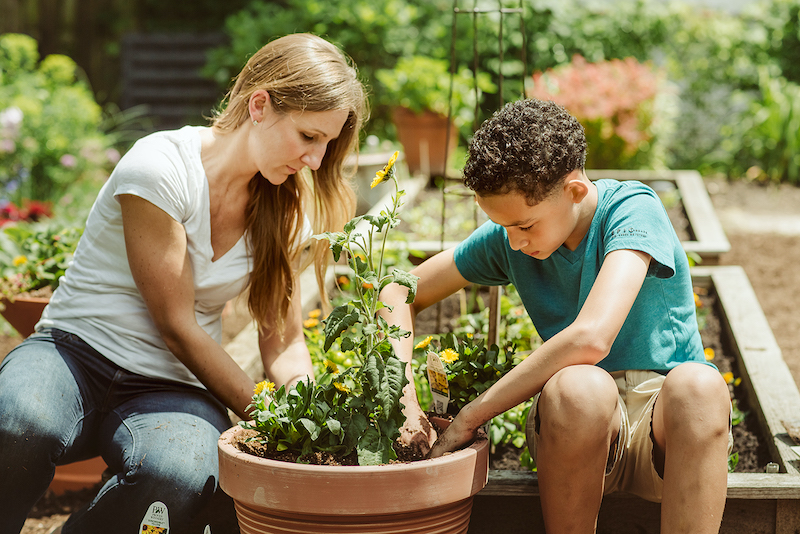
The planter should be large enough that the root ball fits comfortably without being squeezed against the sides, while still leaving room for fresh potting mix and future root growth.
For many houseplants and smaller container plants that need repotting, moving up about 1 to 2 inches in diameter is a common guideline. Illinois Extension recommends moving houseplants up one pot size rather than placing a small plant directly into a much larger container. :chatgpt-content-reference{index="2"}
University of Minnesota Extension similarly recommends choosing a container only modestly larger when repotting houseplants, because too much additional potting mix can stay wet for too long. :chatgpt-content-reference{index="3"}
Outdoor annuals, vegetables, shrubs, and trees may require much larger containers than this, especially when they are expected to remain in the same planter for an entire season or for several years.
Houseplants
Usually move up one pot size when roots have filled the existing container.
Annuals
Size the planter according to mature spread, number of plants, and how quickly the mix will dry.
Vegetables
Larger crops often need significantly more root volume than ornamental annuals.
Shrubs & Trees
Choose a large, stable planter with enough root volume for long-term growth.
Can Pots Be Too Big For Plants?
Yes. A container that is much too large for the root system can hold more moisture than the plant can use, causing the potting mix to stay wet for extended periods.
Illinois Extension notes that over-potting a small plant can lead to poor growth or root rot because the excess soil remains wet longer. :chatgpt-content-reference{index="4"}
An oversized planter is not automatically harmful if the drainage, potting mix, weather, and plant type are appropriate, but it does require more careful watering.
Bigger is not always better. A small plant surrounded by a large volume of constantly wet potting mix may be at greater risk of root problems than the same plant in a more appropriately sized container.
Can Containers Be Too Small For Plants?
Yes. A container that is too small can create the opposite problem.
As roots fill the pot, there is less potting mix available to hold moisture. The container may dry very quickly, sometimes within a day during hot weather.
Signs that a plant may need a larger container include:
- Roots growing through drainage holes
- Roots circling tightly around the root ball
- The potting mix drying unusually fast
- The plant becoming top-heavy or tipping easily
- Water running through the pot almost immediately
- Growth slowing even though light, water, and nutrition are appropriate
Penn State and University of Minnesota Extension both list dense circling roots, roots emerging from drainage holes, rapid drying, and instability as common signs that a plant has outgrown its container. :chatgpt-content-reference{index="5"}
How Deep Does A Planter Need To Be?
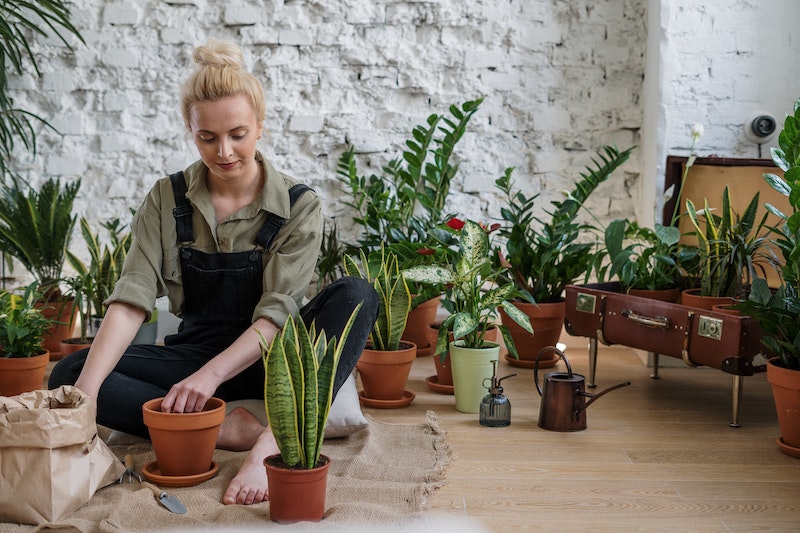
Planter depth should be based on the plant's root system rather than a single universal rule.
Shallow-rooted plants such as many annual flowers, herbs, leafy greens, and succulents can often grow successfully in shallower containers. Larger vegetables, shrubs, trees, and deep-rooted plants need more soil depth and total root volume.
Illinois Extension notes that shallow containers work well for plants such as succulents, while plants that prefer consistently moist soil benefit from a larger root volume that dries more slowly. :chatgpt-content-reference{index="6"}
Shallow-Rooted Plants
Many lettuces, herbs, succulents, and compact annuals can perform well in relatively shallow containers.
Medium-Rooted Plants
Many flowering annuals, perennials, peppers, and compact vegetables benefit from moderate soil depth and volume.
Deep Or Large-Rooted Plants
Tomatoes, many root crops, shrubs, trees, and large perennials generally need larger and deeper containers.
Choosing Planter Sizes For Vegetables
Vegetable container size varies significantly by crop, so it is better to match the planter to the plant instead of using one standard depth.
Illinois Extension provides crop-specific recommendations ranging from roughly half-gallon containers for parsley to larger containers for tomatoes and other vigorous crops. :chatgpt-content-reference{index="7"}
For example, compact leafy greens can be grown in relatively small containers, while tomatoes, peppers, eggplants, cucumbers, and other larger plants benefit from substantially more root volume.
When growing vegetables in containers, larger pots also provide an important practical advantage: they hold more water and dry out more slowly during hot summer weather.
Choosing Planter Depth For Bulbs
Bulb containers need enough depth for the bulb's recommended planting depth plus additional space underneath for roots.
Because planting depth varies by bulb species and bulb size, follow the planting instructions for the specific bulb rather than using one depth for all tulips, iris, daffodils, or other bulbs.
Choosing A Planter For Mixed Containers
When several plants share a container, choose a planter that provides enough root volume for the entire combination rather than sizing it only for the largest individual root ball.
Also combine plants with compatible sunlight and water requirements. A large planter does not solve the problem of placing a drought-tolerant plant next to one that requires constantly moist soil.
Illinois Extension notes that the number of plants in a mixed container can vary depending on how quickly you want the planter to look full. Tighter spacing gives an immediate full look, while wider spacing lets plants fill in over time. :chatgpt-content-reference{index="8"}
Planter Size And Stability
The size of the plant above the soil matters because tall plants can make a container top-heavy.
Illinois Extension recommends considering both planter shape and volume when evaluating stability. Square containers and pots with straighter sides are generally more stable than narrow-bottomed designs, especially on exposed patios, rooftops, balconies, or decks. :chatgpt-content-reference{index="9"}
For tall shrubs, trees, ornamental grasses, or containers with trellises, choose a broad, heavy, or otherwise stable base that is unlikely to tip in wind.
Larger Planters Need Water Less Often
Container size directly affects watering frequency.
A small pot contains less potting mix and therefore stores less water. Under the same growing conditions, it will generally dry faster than a larger planter holding the same type of plant.
Illinois Extension specifically notes that larger containers generally require less frequent watering than smaller containers when the other growing conditions are similar. :chatgpt-content-reference{index="10"}
For more detail about checking soil moisture and watering thoroughly, see Watering Plants In Containers .
How To Measure Plant Pots
Planter dimensions are commonly described by diameter, width, length, and depth.
For a round planter, measure straight across the opening from one edge to the opposite edge through the center. This is the diameter.
For a square or rectangular planter, measure the length and width across the opening. Measure depth vertically from the inside bottom of the planter to the top edge or intended soil level.
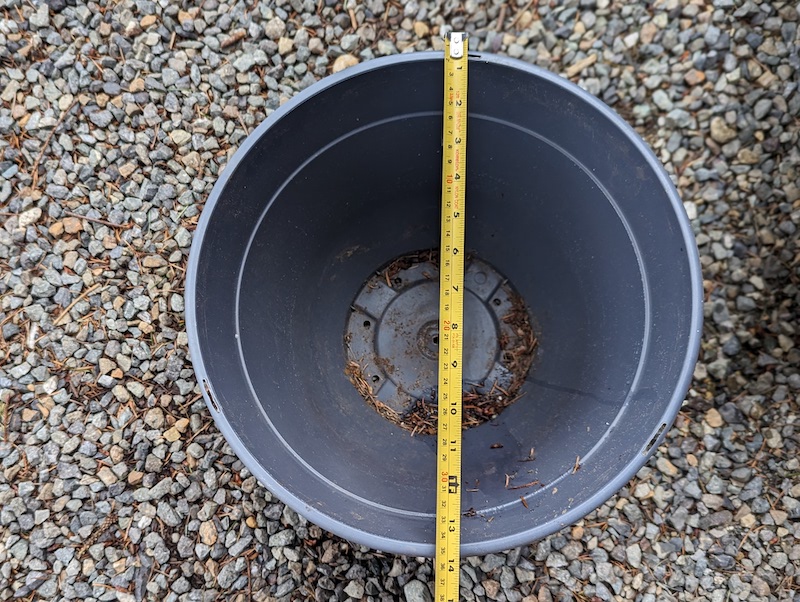
If you also need to determine planter capacity, saucer size, or the amount of potting mix required, see our complete guide to measuring garden planters .
Planter Size Checklist
- Start with the size of the current root ball.
- Consider how large and how quickly the plant will grow.
- Avoid dramatically over-potting a small plant.
- Choose enough depth for the plant's natural root system.
- Use larger containers when you want potting mix to dry more slowly.
- Consider the mature height and wind exposure so the planter remains stable.
- Give trees, shrubs, and long-term perennials more root volume than temporary seasonal annuals.
- Make sure the container has adequate drainage regardless of its size.
Still comparing planters? Size is only one part of the decision. See Choosing The Right Planter for help comparing container size, material, drainage, location, and design.
Sources
- Illinois Extension — Container Size
- Illinois Extension — Get Started With Houseplants
- Illinois Extension — Helpful Tips for Creating a Successful Container Garden
- Illinois Extension — Growing Vegetables in Containers
- University of Minnesota Extension — Spring Houseplant Care
- University of Minnesota Extension — Winter Houseplant Tips
- Penn State Extension — Repotting Houseplants