
Container gardening makes it possible to grow plants almost anywhere, from patios and porches to balconies, entryways, and small outdoor spaces. A well-designed planter can provide seasonal color, grow herbs or vegetables, showcase a favorite shrub, or let you grow plants that would struggle in your native garden soil.
Setting up a garden planter successfully comes down to a few basics: choose the right container, make sure excess water can drain, use a quality potting mix, combine plants with similar growing needs, and leave enough room for roots to develop.
Garden planter setup checklist
- Choose a container large enough for the plants.
- Make sure the planter has adequate drainage.
- Use lightweight potting mix rather than garden soil.
- Combine plants with similar light and moisture needs.
- Arrange plants before filling in around the roots.
- Leave space below the rim for watering.
- Water thoroughly after planting.
- Begin fertilizing when appropriate for the plants and potting mix.
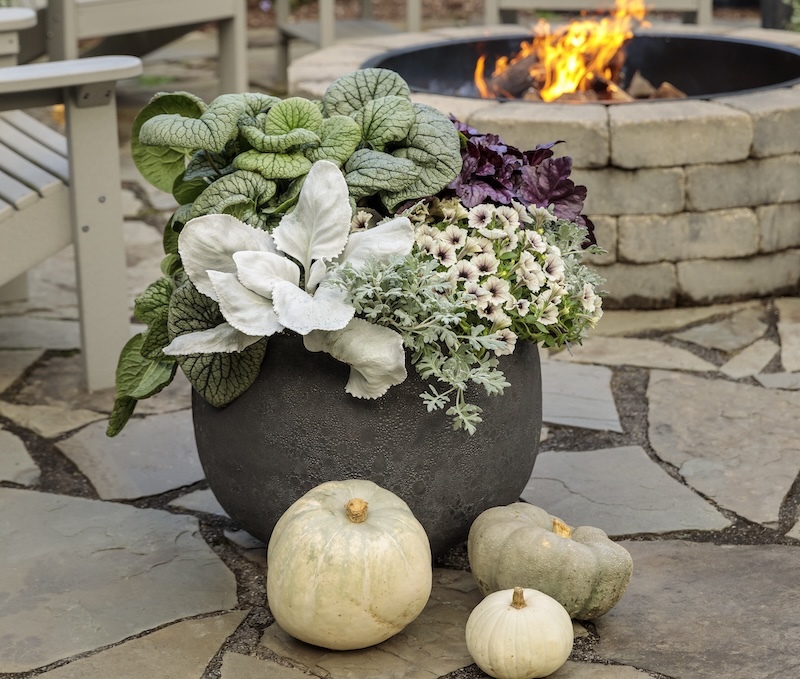
1. Choose The Right Planter
The container should be large enough to support the plant's current root system while allowing room for additional growth. Plants with large or vigorous root systems generally need more soil volume than compact annuals, herbs, or shallow-rooted plants.
Larger containers also dry out more slowly and are generally more stable in wind, which can be useful for tall plants, shrubs, and small trees.
Think about where the container will be used as well. A large concrete planter may work beautifully in a permanent location, while resin, plastic, fiberglass, or other lightweight materials are easier to move.
Need help comparing sizes and materials? See our guide to choosing the right planter .
2. Make Sure The Planter Can Drain
Good drainage is one of the most important parts of setting up a container. Plant roots need oxygen as well as moisture, and potting mix that remains saturated for long periods can lead to root decline and rot.
Whenever possible, choose a planter with drainage holes at the bottom. Outdoor containers especially need a reliable way for rain and irrigation water to escape.
If you are using a decorative container without drainage, consider keeping the plant in a smaller nursery pot with drainage holes and placing that pot inside the decorative container. Remove the inner pot for watering or empty excess water from the outer planter afterward.
Skip the gravel layer. Adding rocks or gravel beneath potting mix does not improve drainage. Water can remain perched in the potting mix above the coarse layer, leaving roots wetter rather than drier.
For a more detailed explanation, see our guide to drainage for potted plants .
3. Use Potting Mix Made For Containers
Container plants need a growing medium that holds enough moisture for roots while still allowing excess water and air to move through the pot.
Avoid filling containers with straight garden soil. Soil dug from the landscape is usually too dense for containers and can compact as it is watered, reducing drainage and root aeration.
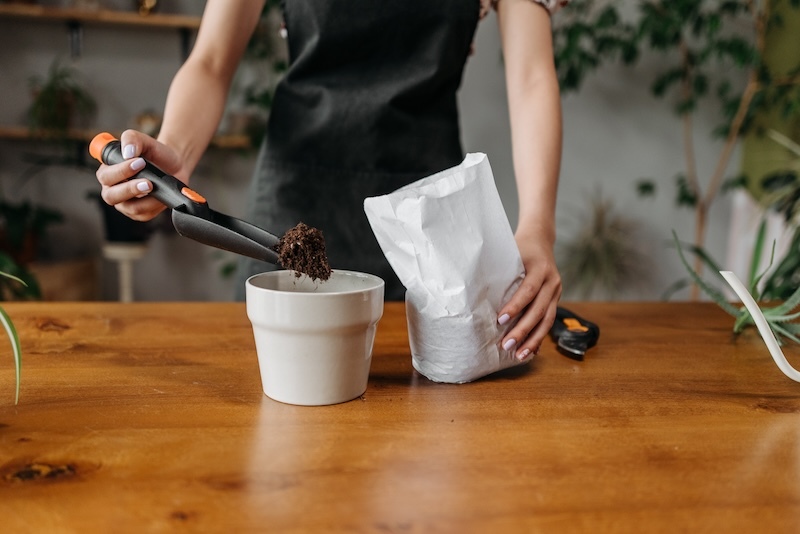
Instead, use a commercial potting mix or soilless container mix. These blends commonly contain materials such as composted bark, perlite, vermiculite, coconut coir, peat, or similar ingredients that balance drainage, moisture retention, and air space.
Specialty plants may need a more specific mix. Succulents and cacti, for example, generally perform better in faster-draining media than moisture-loving plants.
4. Choose Plants With Similar Growing Needs
Plants sharing a container should generally have compatible requirements for sunlight, moisture, and soil conditions.
A drought-tolerant plant that prefers the potting mix to dry significantly between waterings is unlikely to be a good long-term companion for a plant that prefers consistently moist soil.
The same principle applies to light. Combine full-sun plants with other sun lovers and shade-tolerant plants with companions that perform well in lower light.
Sunlight
Group plants that need similar amounts of sun.
Water
Combine plants with compatible moisture preferences.
Growth
Consider mature size so one plant does not overwhelm the others.
5. Plan The Container Design
There is no single correct way to design a container. One plant can make a dramatic statement by itself, or several varieties can be combined to create layers of height, texture, foliage, and flowers.
One popular design method is the thriller, filler, spiller approach:
Thriller
An upright or visually dramatic focal plant that provides height and structure.
Filler
Medium-height plants that fill space around the focal plant and add volume.
Spiller
Trailing plants that grow over the edge and soften the sides of the container.
If the planter will be viewed from every direction, a taller focal plant often works well near the center. If the container will sit against a wall or railing, place taller plants toward the back and shorter or trailing plants toward the front.
Grouping plants in odd numbers can create a pleasing design, but it is a design technique rather than a horticultural requirement. Use the number of plants that fits the size of the container and the mature size of each variety.
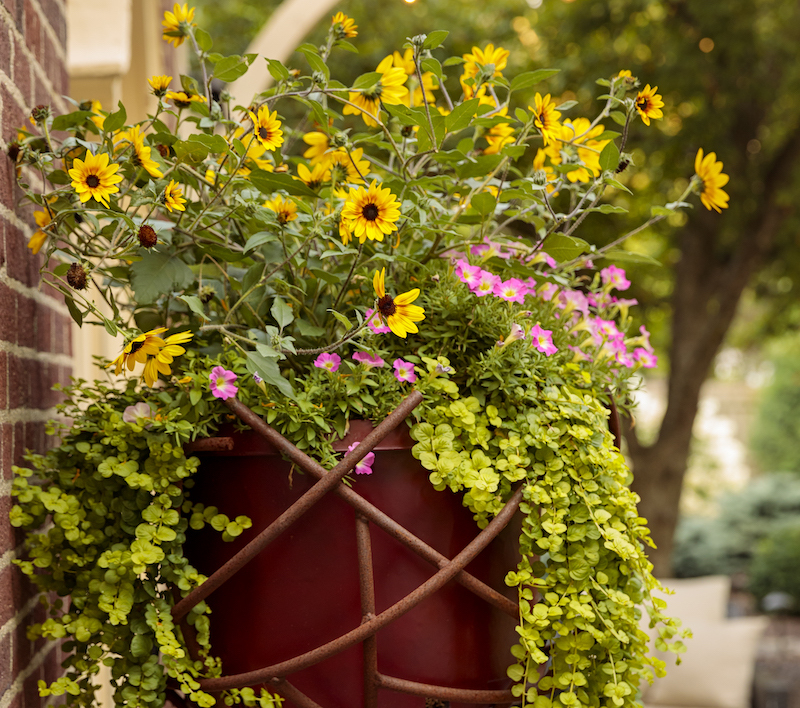
Container Plant Combination Ideas
A planter can be designed around flowers, foliage, edible plants, or a combination of all three.
- Combine an evergreen shrub with seasonal annuals for a container that changes throughout the year.
- Mix foliage with contrasting textures, such as broad leaves, fine grasses, and trailing plants.
- Create a monochromatic planting using several shades of one color.
- Use complementary or analogous flower colors for a stronger color theme.
- Combine edible crops and ornamental plants when they share compatible growing conditions.
For edible containers, herbs, leafy greens, compact vegetables, and smaller fruiting varieties are often easier to manage than very large or vigorous plants.
How Many Plants Should Go In A Container?
The number of plants depends on the size of the container, the size of the transplants, and how large each variety becomes at maturity.
Avoid using a fixed formula such as "three plants in every 12-inch pot." Three compact annuals may fit comfortably in one container while three large perennials or shrubs could quickly become overcrowded.
Check the mature width and root needs of the plants you are using. For mixed seasonal containers, plants can often be spaced somewhat closer than they would be in the landscape because the display is intended to fill in quickly, but adequate root room, water, and nutrients still need to be available.
Trees and shrubs require substantially more root volume and long-term space than annual flowers. Select the container based on the root ball and expected growth rather than using plant height alone to determine pot size.
For more detail, see Choosing Planter Sizes .
6. Fill The Planter With Potting Mix
Add potting mix until the plants can sit at the same depth they were growing in their nursery containers.
Leave approximately 1 inch of space between the finished soil surface and the top of the planter. This creates a watering reservoir so water can soak into the potting mix instead of immediately spilling over the sides.
For extremely large decorative planters, the entire container does not necessarily need to be filled with potting mix if the plants have relatively shallow root systems. Commercial planter inserts or other stable, inert fillers can reduce weight and the amount of potting mix required, provided adequate root depth and drainage remain available.
7. Plant At The Correct Depth
Before removing plants from their nursery pots, arrange them on top of the container to test the layout.
Once you are satisfied, remove the plants from their pots and loosen tightly circling roots when necessary. Position each plant so that the top of its root ball is approximately level with the surrounding potting mix.
Fill gently around the root balls with additional mix and lightly firm it with your hands. Avoid packing the mix so tightly that air spaces disappear.
8. Water Thoroughly After Planting
Water the finished container thoroughly until excess water begins draining from the bottom. This settles the potting mix around the roots and eliminates large air pockets.
Container plants can dry much faster than plants growing in the ground, particularly during hot, sunny, or windy weather. Check the potting mix regularly rather than watering strictly by the calendar.
Learn more in our guide to watering plants in containers .
9. Fertilize As Needed
Container plants often need regular fertilizer because their roots are confined to a small volume of potting mix and repeated watering can leach nutrients from the container.
An all-purpose fertilizer is a good starting point for many container plants. Slow-release products can provide nutrients gradually over several months, while water-soluble fertilizers can be applied periodically during active growth.
Check whether your potting mix already contains fertilizer before adding more, and always follow the fertilizer label.
Avoid relying on one specific N-P-K ratio for every flowering plant, shrub, or tree. Nutrient requirements differ by plant, and excessive fertilizer can damage roots.
For complete feeding guidance, see Fertilizing Plants In Containers .
Garden Planter Tips
- Match plants with similar sunlight and moisture requirements.
- Use a container with enough room for mature root growth.
- Make sure excess water can drain freely.
- Use potting mix instead of straight garden soil.
- Leave about an inch below the rim to make watering easier.
- Consider container weight and stability when growing tall plants.
- Position thrillers in the center for a 360-degree display or toward the back when viewed mainly from one side.
- Remember that smaller containers usually dry out faster than larger containers.
Build The Planter Around The Plants
A successful container does not require complicated rules. Start by understanding what your plants need, then choose a planter, potting mix, and location that support those needs.
Once those fundamentals are right, the creative part is entirely up to you. Containers are one of the easiest places to experiment with new plant combinations, bold colors, unusual foliage, and seasonal designs without making permanent changes to your landscape.
Sources
- University of Minnesota Extension — Fertilizing and Watering Container Plants
- University of Minnesota Extension — Container Gardening for Small Spaces
- Illinois Extension — Container Drainage Options
- Illinois Extension — Soil for Container Gardens
- Illinois Extension — Helpful Tips for Creating a Successful Container Garden
- Penn State Extension — Container Vegetable Gardening: Four Keys to Success

Written By
Senior Gardening Writer at Plant Addicts
Published March 13, 2024 | Updated October 2, 2026