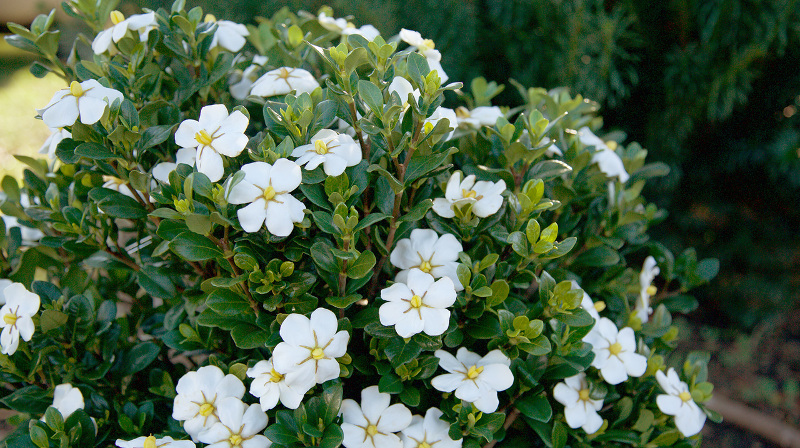
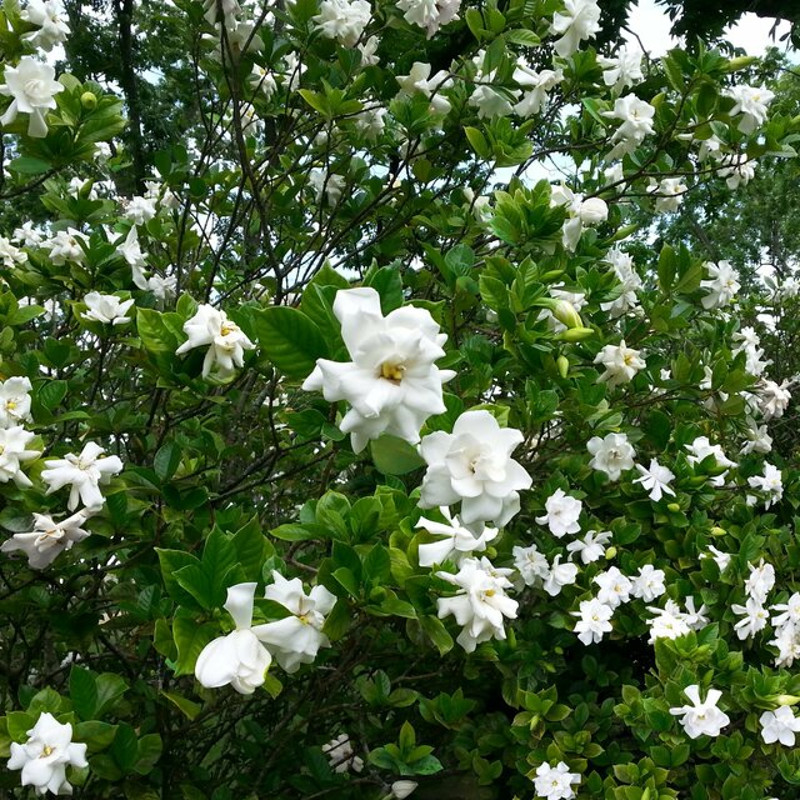
Gardenias are beautiful shrubs with dark green leaves and creamy white fragrant flowers. If you have one growing in your yard or garden you are truly lucky, as their fragrance is a classic scent. They are easy to care for and need a minimal amount of pruning or cutting back to stay healthy and strong. The most important thing to get right is timing, because pruning at the wrong time of year can cut off next year’s flowers. The quick answer: Prune gardenias right after their main flush of flowers fades, which is late spring to midsummer depending on where you live. Gardenias form next year’s flower buds in late summer and fall, so finish any shaping by late summer and avoid pruning in fall, winter or early spring. Never remove more than one-third of the shrub at a time. For reblooming varieties, prune lightly after the first flush of flowers. Jump To Gardenia Pruning Topics Don’t prune gardenias in fall or early spring. Most gardenias bloom on wood that matured the previous year. By fall, the shrub has already set its flower buds, so pruning in fall, winter or early spring cuts off the flowers you would have enjoyed the next summer. The best time to prune your gardenia is in the summer months just after the last flower has bloomed. When the flowers are gone, you can safely cut back or prune your plant. Cutting back at this time of year, right after blooming, gives the new growth time to mature and set buds for the following year. Depending on your climate, this is usually late spring in warm southern gardens and early to midsummer farther north. Pruning right after the blooming season also avoids cutting away new buds that may be developing. Some gardeners prune their shrubs in early fall, but this removes flower buds that are already forming for next year, and any new growth it triggers may be damaged by cold. Light shaping can continue through summer, but save any heavy cutting for right after bloom. So when you see the last of your flowers drop to the ground, this is the best time to prune your shrub. Some gardenias, such as ‘August Beauty’, Jubilation™ and Frost Proof, bloom in late spring and then rebloom into summer or fall. Prune these lightly right after the first big flush of flowers fades. Heavy pruning at that point may reduce the later flowers, while waiting until late summer can cut into the next year’s main bloom. Deadheading throughout the season keeps reblooming types looking their best. Gardenias do not need to be pruned every year. Many gardeners trim their shrubs every other year or even every three years to keep their size and shape in check. This can be a matter of personal choice and also garden space and design. If you want to keep your shrubs more compact, prune them more often, even every year. If you do not mind a bit of growth, then every year or two is fine. If left alone, however, they can outgrow their space and crowd out other plants. So you will want to prune them occasionally. This helps avoid overcrowding and keeps your yard looking nice and neat. Keep them close to the size and shape you desire in your yard or landscaping. It may be difficult to cut your beautiful plant at first, but you will be rewarded next growing season with a fuller, better-shaped shrub covered in flower buds. If you feel your plant is growing too quickly, an annual pruning will help slow its growth and spread. Gardenia flowers turn yellow, then brown, as they fade. Removing them keeps the shrub looking fresh and, on reblooming types, can encourage more flowers. Pinch off or snip each spent flower just above the first set of leaves below it. You can deadhead any time during the blooming season without harming next year’s buds. If a gardenia has been left to grow for years, avoid cutting it all back at once. Instead, renew it gradually right after it blooms: Cutting a gardenia back harder than this will usually work, but expect few or no flowers the following season while the shrub regrows. A hard freeze can leave gardenia leaves brown and branch tips dead. Resist the urge to prune right away. Wait until new growth appears in spring so you can see which branches are alive. Then cut damaged stems back to healthy green wood. Scratching the bark with a fingernail is an easy way to check: green tissue underneath means the stem is alive. If you have to cut back a lot of the plant, it may bloom little or not at all that year, since the flower buds were already set before winter. The shrub should regrow and bloom again the following season. For more on protecting gardenias from cold, see gardenia winter care. It is not essential to prune gardenia shrubs. In fact, you may leave them for several years to grow and bloom on their own. However, given the right growing environment, they will keep growing, and before you know it you may have a very “wild” and “overgrown” shrub. Giving your plants an occasional or every-other-year pruning will keep them in good shape. We prune plants to keep them healthy, strong and well shaped. It also helps keep their size in check and improves airflow through the branches. Gardenias are known for their fragrant blooms, and a healthy, well-trimmed shrub produces plenty of them. This is something anyone who has ever owned a gardenia plant will not argue with. Browse fragrant gardenias for borders, hedges, patios and containers, including compact and reblooming varieties. Right after the main bloom fades, usually late spring to midsummer depending on your climate. Finish any shaping by late summer so the shrub can set flower buds for next year. It is best not to. Gardenias set their flower buds in late summer and fall, so fall pruning removes next year’s flowers. Any new growth it triggers may also be damaged by cold. Only to remove dead or winter-damaged branches. Heavier spring pruning cuts off the flower buds that are about to open. Most gardenias bloom on wood that grew and matured the previous year, which is why timing matters. Reblooming varieties also produce later flowers on the current season’s growth. Remove no more than one-third of the shrub at a time. For an overgrown gardenia, spread the pruning over two to three years. Yes. Snip off faded flowers just above the next set of leaves. It keeps the shrub tidy and can encourage more flowers on reblooming types. It was most likely pruned after the flower buds had formed, in fall, winter or early spring. Prune right after blooming next time, and the shrub should flower normally the following season. Gardenias need only occasional pruning, but timing is everything. Prune right after the main bloom fades, finish by late summer, and avoid fall, winter and early spring pruning so you do not cut off next year’s flowers. Use clean, sharp tools, remove no more than one-third of the shrub at a time, and deadhead faded flowers through the season. With a little care, your gardenia will stay full, shapely and covered in fragrant blooms. Written by Janice Cox Janice Cox is a garden writer and natural beauty expert in Southern Oregon who grows a wide variety of flowers and herbs. She is the author of several books, including Natural Beauty from the Garden and Beautiful Lavender, served as beauty editor for Herb Quarterly magazine for more than 20 years, and is education chair for The Herb Society of America. Originally published November 9, 2021. Last updated November 2026.Pruning Gardenias
Gardenia Pruning Calendar
When
What To Do
Why
Right after the main bloom
(late spring to midsummer)Main pruning: shape the shrub, control size and thin crowded branches
New growth has time to mature and set buds for next year
Summer
Deadhead faded flowers and make light shaping cuts
Keeps the plant tidy; reblooming types may flower again
Late summer through winter
Avoid pruning, except to remove dead or broken branches
Flower buds for next year are forming, and late new growth is easily damaged by cold
Early spring
Remove only winter-damaged wood once new growth appears
Heavier pruning now removes the coming season’s flowers
When To Prune Gardenias
Pruning reblooming gardenias
How Often Should You Prune Gardenias?
How To Prune Gardenias
Deadheading Gardenias
How To Prune An Overgrown Gardenia
Pruning Gardenias After Winter Damage
Why Prune Gardenias?
Common Gardenia Pruning Problems
Problem
Likely Cause
What To Do
Few or no flowers
Pruned in fall, winter or early spring, after buds formed
Prune only right after blooming. See why gardenias aren’t blooming.
Leaf drop after pruning
Too much removed at once
Limit pruning to one-third of the shrub and keep it well watered
Leggy, open shrub
Years without pruning, or too little sun
Renew gradually over two to three years after bloom
Flower buds dropping
Usually dry soil or temperature swings, not pruning
Keep the soil evenly moist. See watering gardenias.
Gardenia Pruning Tips
Shop Gardenias
Frequently Asked Questions About Pruning Gardenias
When is the best time to prune gardenias?
Can you prune gardenias in the fall?
Can you prune gardenias in the spring?
Do gardenias bloom on old wood or new wood?
How much can you cut back a gardenia?
Should you deadhead gardenias?
Why didn’t my gardenia bloom after pruning?
Bottom Line
Sources
About The Author