Juniper is a low-maintenance evergreen that adds effortless color and texture to a space. Known for being drought tolerant, juniper is excellent for busy or inexperienced gardeners who want the look of a manicured space without much work. This evergreen shrub is available in all shapes and sizes, so it is easy to find a variety that works for your landscape. Juniper is also relatively easy to propagate, so once you find a cultivar that works well in your yard, you can propagate more of them and enjoy a full and lush landscape.
The quick answer: The easiest way to propagate juniper is from stem cuttings taken from late fall through late winter while the shrub is dormant. Take 4 to 6-inch cuttings of the current season's growth, remove the lower needles, dip the base in rooting hormone, and stick them in a sterile, well-drained rooting mix. Keep the humidity high and the mix lightly moist. Most cuttings root in 2 to 4 months, and they are usually ready to plant outdoors in 6 to 12 months.
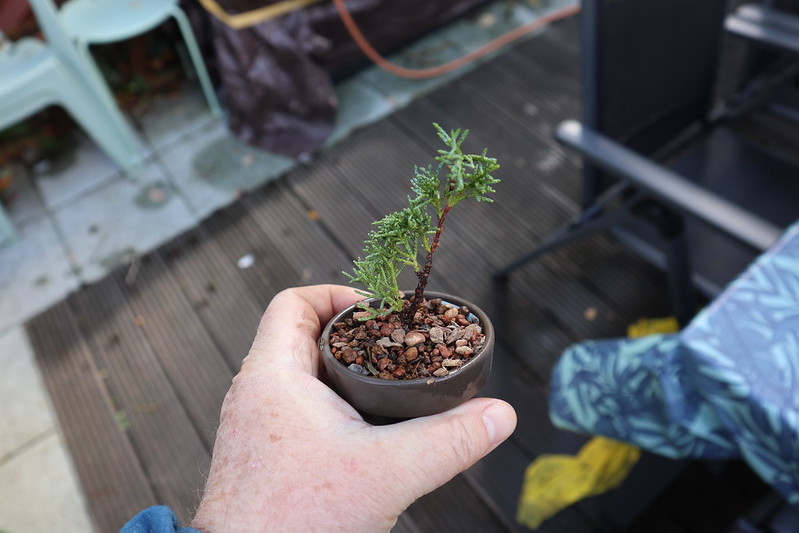
A rooted juniper cutting in a small pot. Photo by Jerry Norbury, unedited, Flickr, CC BY-ND 2.0.
Roots in 2 to 4 months; ready to plant out in 6 to 12 months
Yes
Layering
Spring
A year or more before the new plant can be cut free
Yes
Seed
Collect in fall; stratify before sowing
Often a year or more to germinate, then several years to reach a mature shrub
No. Seedlings vary from the parent.
Methods To Propagate Juniper
You can propagate junipers through cuttings, seed, or layering. Cuttings are often the easiest and most effective method. It usually takes 6 to 12 months from the time a cutting is taken until it can be planted outdoors.
Propagating Juniper From Cuttings
Stem cuttings are the most reliable way to grow more of a juniper you already have. Because a cutting is a clone of the parent plant, the new shrub will have the same color, shape and size as the original. Low, spreading and groundcover junipers generally root more easily than tall, upright types. See the step-by-step instructions below.
Propagating Juniper From Layering
Layering is a process of bending and securing a low branch, so it is still attached to the plant but also touches the ground. With time, the branch will develop roots and become a viable shrub, at which point it can be removed from the parent plant. Layering is a slow process, often taking a year or longer, but it works well for low, spreading junipers. Many spreading types will even root on their own where branches rest on the soil.
Choose a low, flexible branch that can reach the ground.
Lightly scrape a small strip of bark on the underside of the branch where it will touch the soil.
Pin that section to the ground with a landscape staple and cover it with a few inches of soil.
Keep the soil moist and leave the branch attached through the growing season.
Once roots have formed, cut the branch free from the parent plant and transplant it.
Propagating Juniper From Seed
Juniper can be grown from seed, but it is the slowest and least predictable method. Harvest the berry-like cones in the fall once they ripen. The seeds have a deep dormancy and usually need a period of warm, moist stratification followed by a period of cold, moist stratification before they will sprout. Germination can be uneven and may take a year or more.
The young plant will need extra care and attention for the first couple of years, and it will take years to grow a mature shrub. Seedlings also will not look exactly like the parent plant, so seed is not a good way to reproduce a specific cultivar.
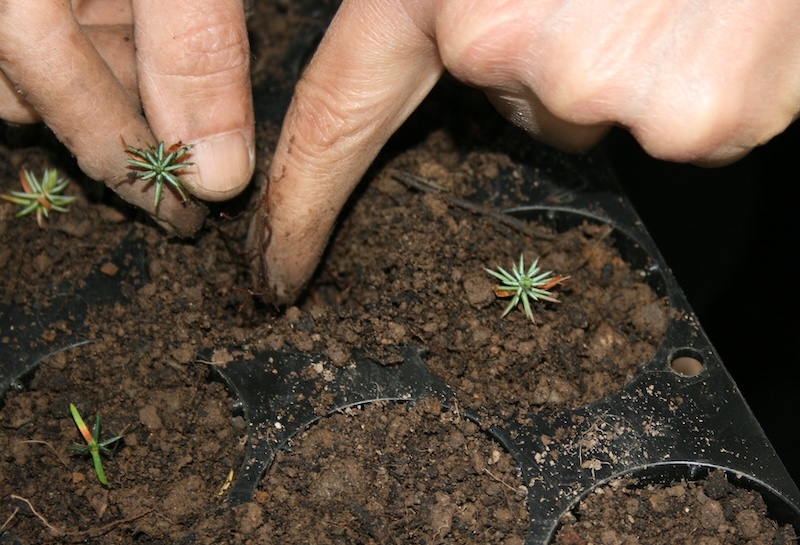
Juniper seedlings being potted up at a nursery. Photo by Chris Cant, cropped, Flickr, CC BY 2.0.
Best Time To Propagate Juniper
Take stem cuttings from late fall through late winter. Junipers root best from cuttings taken after the shrub has stopped growing for the year and is dormant. Prepare the shrub by making sure it is adequately watered the day before pruning, and ideally, take the cutting early in the morning.
Avoid taking cuttings during the summer. Trimming a juniper during the summer heat is stressful to the plant, and the cutting is more likely to dry out before it forms roots.
Timing tip: If you prune your junipers in late winter, save the healthiest trimmings. They make good cuttings.
What You Need To Propagate Juniper
Remove a stem cutting with sharp, clean pruning shears. Plant the cutting in a container with drainage, using a sterile, well-drained rooting mix rather than garden soil or rich potting soil. Some gardeners find a rooting hormone to be helpful, and it is, but it isn’t strictly necessary. Juniper cuttings require increased humidity to root, so place them in a greenhouse or use plastic to tent or dome the cutting, creating a greenhouse effect.
Supplies checklist
Sharp, clean pruners: Clean cuts root better and are less likely to spread disease.
Pots or trays with drainage holes: Small 3 to 4-inch pots work well.
Rooting mix: Equal parts perlite and peat, or coarse sand and peat. Avoid fine sand and garden soil.
Rooting hormone: Optional, but especially helpful for slower-rooting upright junipers.
Clear plastic bag or humidity dome: Keeps moisture around the cuttings.
Seedling heat mat: Optional, but warming the rooting mix to about 70°F can speed rooting.
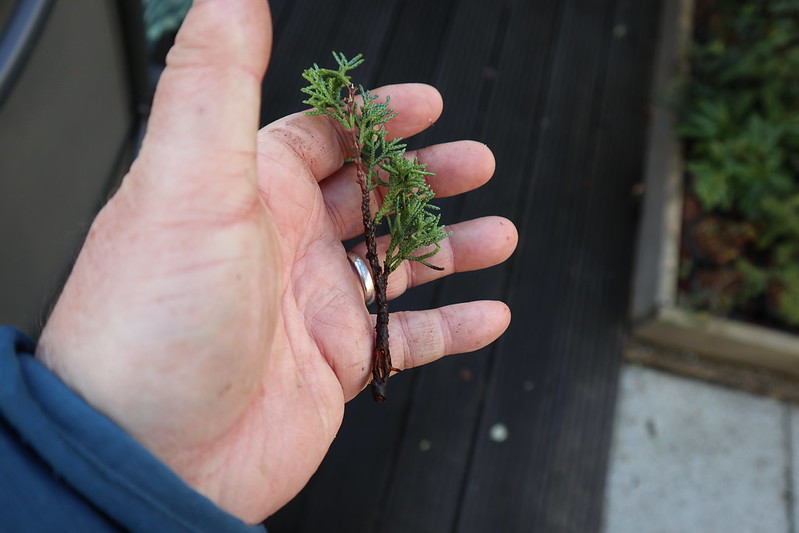
A Chinese juniper stem cutting. Photo by Jerry Norbury, unedited, Flickr, CC BY-ND 2.0.
How To Propagate Juniper From Cuttings
Time it right. Take cuttings from late fall through late winter while the plant is dormant. Water the juniper shrub the day before so the plant is hydrated and healthy.
Take the cutting. Choose a healthy shoot of the current season's growth and trim a 4 to 6-inch long stem section. A small “heel” of older wood at the base can help it root.
Prepare the pot. Fill a pot with moist, well-drained rooting mix. Make sure the pot has drainage holes.
Strip the lower needles. Remove the needles or greenery from the bottom 1 to 2 inches of the cutting. Although not necessary, you can dip the cut end in rooting hormone.
Stick the cutting. Make a hole with a pencil and place the cut end at least 1 to 2 inches deep in the mix. Firm the mix around the stem.
Add humidity. Water immediately, then cover the pot with a clear plastic bag or humidity dome.
Choose the right spot. Place the cuttings in bright, indirect sunlight. Set the pot on a heat mat if you have one.
Caring For Young Juniper Cuttings
Juniper cuttings do well in a greenhouse where they can soak up increased humidity and warmth, but they can also root in a home or protected outdoor area. Give the cuttings bright, indirect sunlight and water when the top layer of the rooting mix is dry. The mix should be moist but not saturated. Use a plastic bag to create a tent over the container to increase the humidity and prevent the cutting from drying out. Open the tent for a few minutes every few days to let in fresh air.
Roots usually form in 2 to 4 months, though some slower types can take up to 6 months. Do not fertilize until the cuttings have rooted. Scale back on the water after the roots grow, and give the young plant a drink when the top couple of inches of soil are dry.
Signs your cutting has rooted
You feel light resistance when you gently tug on the cutting.
New, bright green growth appears at the tips.
Roots are visible at the drainage holes.
Transplanting Rooted Juniper Cuttings
Once a cutting has a healthy root system, move it into a slightly larger pot filled with regular potting mix. Let it grow in the pot until the roots fill the container. Before planting outdoors, harden the young plant off by setting it outside in a sheltered spot for a few hours a day, increasing the time over 1 to 2 weeks.
Transplant the cutting outside in the spring after there is no longer a threat of frost. Choose a sunny spot with well-drained soil and water regularly during the first growing season. Our guides to planting juniper and watering juniper cover the details.
Common Problems With Juniper Cuttings
Problem
Likely Cause
What To Do
Cutting turns brown and dry
Low humidity or too much direct sun
Keep cuttings covered and move them to bright, indirect light
Base of stem turns black or mushy
Mix is too wet, or the cutting was rooted in water or unsterile soil
Use fresh, sterile rooting mix and let the surface dry slightly between waterings
Mold on the mix or foliage
Too little airflow under the cover
Vent the bag or dome every few days and remove any dead cuttings
No roots after several months
Cutting taken during active growth, cool rooting mix, or a slow-rooting upright variety
Be patient, add bottom heat, and take extra cuttings next time to improve your odds
Can You Propagate Any Juniper?
Older and common juniper varieties can be propagated freely for your own garden. Many newer cultivars, however, are protected by plant patents, which cover propagation by cuttings, layering and other vegetative methods.
Check the plant tag before you propagate. It is illegal to reproduce patented plants without permission. Patented plants are marked with “PP” followed by a number, or “PPAF” (Plant Patent Applied For).
Shop Juniper
Skip the wait and start with an established plant. Browse junipers for groundcovers, slopes, foundation plantings, hedges and year-round evergreen color.
Frequently Asked Questions About Propagating Juniper
What is the easiest way to propagate juniper?
Stem cuttings are the easiest and most reliable method. They grow into a new plant that matches the parent, and most root within a few months.
When is the best time to take juniper cuttings?
Late fall through late winter, while the shrub is dormant. Cuttings taken in summer are more likely to dry out before they root.
Can you root juniper cuttings in water?
It is not recommended. Juniper stems sitting in water are prone to rot. A sterile, well-drained rooting mix gives much better results.
How long does it take juniper cuttings to root?
Most juniper cuttings root in 2 to 4 months, but some take up to 6 months. Bottom heat can speed things up.
Do I need rooting hormone for juniper cuttings?
It is not strictly necessary, but rooting hormone improves success, especially with upright junipers that are slower to root.
Will juniper grown from seed look like the parent plant?
Usually not. Seedlings vary from the parent, so use cuttings or layering if you want an exact copy of a specific variety.
Can you grow a juniper from a branch that touches the ground?
Yes. This is called layering. Low, spreading junipers often root where branches rest on the soil. Once the branch has roots, you can cut it free and transplant it.
Bottom Line
Stem cuttings are the simplest way to grow more of a juniper you already love. Take cuttings from late fall through late winter, use a sterile rooting mix, keep the humidity high, and give them a few months to root.
Layering works well for low, spreading types, while seed is best saved for patient gardeners who do not need an exact match to the parent plant. Before you start, check the plant tag to make sure the variety is not patented.
Alison Cotsonas writes about plant care, perennials, shrubs, and gardening for Plant Addicts. Plant Addicts helps gardeners choose the right plants and care for them successfully in home landscapes and containers.
Originally published December 22, 2023. Last updated November 2026.