
Propagating Ficus
Have you fallen in love with ficus’s glossy green foliage? Would another one of these low-maintenance tropical plants make you smile even bigger? If so, propagating ficus using stem cuttings is relatively easy. Within 4 to 8 weeks, your cutting should have roots and be on its way to becoming another beautiful ficus to call your very own.
The quick answer: To propagate ficus, take a 4 to 6-inch stem cutting with at least 3 nodes in spring or summer, cutting just below a node. Remove all but the top one or two leaves, dip the end in rooting hormone, and stick it in a moist mix of perlite and peat moss. Cover with a clear plastic bag and keep it warm, humid and in bright, indirect light. Roots usually form in 4 to 8 weeks. For tall, leggy plants, air layering is another reliable option.

Jump To Ficus Propagation Topics
Ficus Propagation At A Glance
| Method | Best For | Time To Root | Difficulty |
|---|---|---|---|
| Stem cuttings in rooting mix | Most ficus, including weeping fig, rubber tree and fiddle-leaf fig | 4 to 8 weeks | Easy |
| Air layering | Tall, leggy rubber trees and fiddle-leaf figs with thick, woody stems | 1 to 3 months | Moderate |
| Stem cuttings in water | Watching roots form; quick, casual propagation | Several weeks | Easy, but roots adjust less easily to soil |
Methods To Propagate Ficus
Ficus is commonly propagated by air layering and stem cuttings. Depending on the particular species, stem cuttings are usually most successful. With species such as Ficus benjamina (weeping fig), Ficus elastica (rubber tree), and Ficus lyrata (fiddle-leaf fig), stem cuttings typically root in about 4 to 8 weeks.
To propagate by stem cutting, identify a 6-inch leafed sprig with at least 3 nodes and make a cut just below the lowest node. After clipping the sprig, dip it into rooting hormone and insert it into a rooting medium or damp soil. Wait 4 to 8 weeks until roots form. Potting in soil is a better choice than water because the developed roots will have a better chance of growing well in future soil mixtures.
Air layering roots a section of stem while it is still attached to the parent plant. It is a good choice for rubber trees and fiddle-leaf figs that have grown too tall or lost their lower leaves.
Best Time To Propagate Ficus
Spring and early summer are the best times to propagate ficus. The plant is actively growing during the warm season, so cuttings and air layers root faster. Cuttings taken in fall or winter can still root indoors, but they usually take longer.
Best Rooting Media To Propagate Ficus
Two superb rooting mixtures to propagate ficus are perlite/peat moss and vermiculite/sand, each mixed 1:1. Perlite, peat moss, and sand improve aeration and facilitate drainage; peat moss and vermiculite help to retain moisture. Water can be used as a rooting medium, but the roots often do not establish as well when transplanted into a soil mixture.
Supplies checklist
- Gloves: Ficus sap can irritate skin.
- Sharp pruners or a clean knife: Wipe blades with rubbing alcohol before cutting.
- Rooting hormone: A powder or gel containing IBA.
- Rooting mix: Equal parts perlite and peat moss, or vermiculite and sand.
- Small pots with drainage holes: 3 to 4-inch pots work well for single cuttings.
- Clear plastic bag or humidity dome: Keeps humidity high around the cutting.
How To Propagate Ficus From Stem Cuttings
- Wear gloves. Protect your hands from ficus’s milky sap by wearing a pair of gloves.
- Clean your tools. Clean a pair of pruning shears with alcohol.
- Choose a healthy stem. Choose a healthy, green sprig about 6 inches in length that has at least three nodes.
- Make the cut. Cut just below a node. Avoid leaving a long stub of stem below the node, since it can rot.
- Remove lower leaves. Remove all of the leaves except the top one or two.
- Apply rooting hormone. Dip the stem cutting into rooting hormone, such as a powder or gel containing IBA (indolebutyric acid).
- Stick the cutting. Place the stem cutting into a moist rooting medium, such as a perlite, peat moss, vermiculite, and sand mixture.
- Mist. Mist to keep the medium moist.
- Cover. Cover the stem cutting with a clear plastic bag.
- Wait for roots. Wait 4 to 8 weeks for the stem cutting to root.
- Pot it up. Transplant the rooted plantlet into a new pot filled with houseplant potting soil amended with perlite.
Handle ficus sap with care. The milky sap can irritate skin and is toxic to pets if swallowed. Wear gloves, wipe up drips, and keep cuttings out of reach of cats and dogs. Learn more in Is Ficus Poisonous?
How To Propagate Ficus By Air Layering
Air layering lets a section of stem grow roots before you cut it from the parent plant. It works especially well for rubber trees, weeping figs and fiddle-leaf figs with thick, woody stems.
- Pick a spot. Choose a point on a stem 12 to 18 inches below the tip and remove any leaves in that area.
- Wound the stem. With a clean knife, make a 1 to 2-inch upward slanting cut about one-third of the way into the stem. Wedge it open with a toothpick.
- Add rooting hormone. Dust the cut with rooting hormone.
- Wrap with moss. Pack a handful of moist sphagnum moss around the wound.
- Cover and tie. Wrap the moss in clear plastic and tie it securely above and below with twist ties.
- Keep it moist. Check the moss every week or two and add water if it starts to dry out.
- Cut and pot. When plenty of roots are visible through the plastic, usually in 1 to 3 months, cut the stem just below the moss. Remove the plastic and pot the new plant with the moss still in place.
Can You Propagate Ficus In Water?
Yes. Ficus cuttings will root in water, and many gardeners enjoy watching the roots form. However, water roots are more fragile and often struggle when moved to soil, which is why a rooting mix is the better long-term choice.
Water propagation tips
- Place the cutting in a clear jar with at least one node below the water line.
- Keep all leaves above the water.
- Change the water once a week.
- Pot the cutting in soil once the roots are 1 to 2 inches long, and keep the soil evenly moist for the first few weeks.
Caring For Ficus Cuttings
To care for your ficus stem cuttings, mist the cutting and rooting medium every 3 to 4 days. To increase the chances of these cuttings rooting, maintain them in temperatures of 70 to 75 degrees with at least 90 percent humidity. Cover their container with a plastic bag to help retain the proper temperature and moisture levels. Give the cuttings about 12 hours of bright, indirect sunlight, or if that is not available, 16 hours beneath grow lights.
Signs your cutting has rooted
- You feel light resistance when you gently tug on the cutting.
- A new leaf begins to unfurl at the tip.
- Roots are visible at the drainage holes.
Transplanting Ficus Cuttings
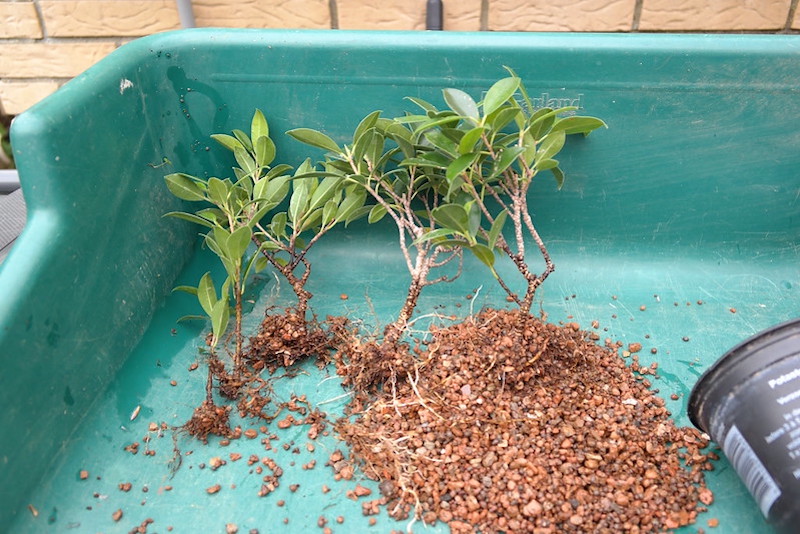
After the stem cutting has rooted in approximately 4 to 8 weeks, transplant the plantlet to a 4-inch pot filled with average potting soil amended with perlite. Moisten the substrate. Using a pencil or finger, dig a hole slightly larger than the root mass. Place the roots into the hole and gingerly fill the gap around it. Lightly tamp the soil.
Ficus has a fast growth rate, so you may need to repot the new plant into a larger vessel within a few months. For now, it needs enough soil volume to give the roots space to grow but not too large a volume to retain excess moisture. Ficus is susceptible to fungal diseases such as root rot, so avoiding excess moisture is essential. Set ficus in a room receiving bright, indirect sunlight, preferably 3 to 5 feet from an east-facing or west-facing window, and watch its gorgeous broad leaves unfurl.
For ongoing care, see our guides to watering ficus, fertilizing ficus and ficus sunlight requirements.
Common Problems With Ficus Cuttings
| Problem | Likely Cause | What To Do |
|---|---|---|
| Leaves wilt or droop | Low humidity or too many leaves left on the cutting | Keep the cutting covered and trim to one or two leaves. Large leaves can be cut in half. |
| Stem turns black or mushy | Rooting mix is too wet, or a stub was left below the node | Recut just below a healthy node and restart in fresh, lightly moist mix |
| Leaves drop | Cold drafts, sudden temperature changes or low light | Keep cuttings at 70 to 75°F in bright, indirect light away from vents and doors |
| No roots after 8 weeks | Cool temperatures or cuttings taken in fall or winter | Move to a warmer spot, use a seedling heat mat, and be patient |
Shop Ficus
Browse ficus plants for bright rooms, home offices and indoor greenery, from rubber trees to fiddle-leaf figs.
Shop FicusFrequently Asked Questions About Propagating Ficus
What is the easiest way to propagate ficus?
Stem cuttings are the easiest method for most ficus. Take a 4 to 6-inch cutting with at least three nodes, dip it in rooting hormone, and root it in a moist perlite and peat mix under a plastic cover.
How long does it take ficus cuttings to root?
Most ficus cuttings root in 4 to 8 weeks when kept warm and humid. Cuttings taken in fall or winter may take longer.
Can you propagate ficus in water?
Yes, but cuttings rooted in a moist rooting mix usually adjust to soil more easily. If you use water, change it weekly and pot the cutting once roots are 1 to 2 inches long.
Can you propagate ficus from a single leaf?
A leaf on its own may grow roots, but it will not grow into a new plant without a node. Include a piece of stem with at least one node, where new growth develops.
When is the best time to propagate ficus?
Spring and early summer, when the plant is actively growing. Warm temperatures help cuttings and air layers root faster.
Do I need rooting hormone to propagate ficus?
It is not strictly required, but a rooting hormone containing IBA helps cuttings root faster and more evenly.
How do I propagate a leggy rubber tree or fiddle-leaf fig?
Air layering is a good choice. Root the top section of the stem while it is still attached, then cut it off and pot it. The parent plant will often branch from below the cut.
Bottom Line
Ficus is easy to propagate from stem cuttings taken in spring or early summer. Cut just below a node, use rooting hormone and a well-drained rooting mix, and keep the cutting warm, humid and in bright, indirect light until it roots in 4 to 8 weeks.
For tall, leggy plants with thick stems, air layering is a reliable alternative. Once your new plant has roots, pot it in a 4-inch container and avoid overwatering while it settles in.
Sources
- University of Florida IFAS: Landscape Plant Propagation Information, Ficus spp.
- Iowa State University Extension: How Can I Propagate a Rubber Tree?
- Missouri Botanical Garden: Propagating Plants by Cuttings and Air Layering a Dicot Plant
- Rutgers Cooperative Extension: Propagating Plants from Cuttings
About The Author

Written by Suellen Barnes
Suellen Barnes is a freelance writer and cut-flower gardener in Carroll County, Maryland. She writes about plant care, container gardening, houseplants, landscape design, and native plants for Plant Addicts.
Originally published June 2, 2022. Last updated November 2026.