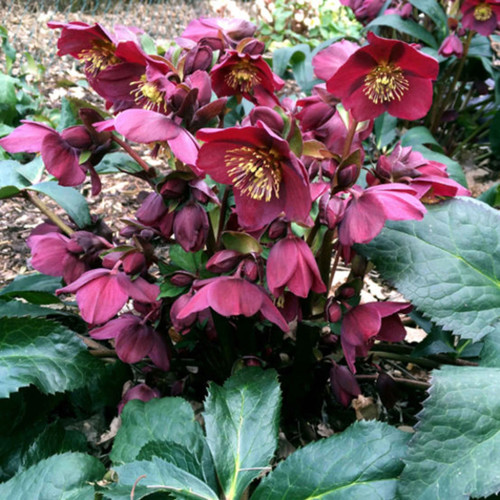
Hellebores are native to Europe and western Asia and consist of approximately 20 species of flowering perennial plants in the family Ranunculaceae. Hellebore foliage is evergreen and forms a low clump with leaves that are lobed and palm-like. The rose-shaped flowers shoot up above the foliage but nod under their own weight. This plant blooms in almost any color out there, including the black shade that we offer.
Hellebore plants are hardy in zones 3-9, and deer and pest resistant. They are one of the first to bloom in late winter or early spring and are perfect for a shade garden. Also known as Lenten Rose or Christmas Rose, this plant grows nicely in raised beds or along walkways as long as the area has partial shade and the soil is well draining.
Europe, Asia Minor, and parts of the Mediterranean
Plant Type:
Perennials
Foliage Type:
Evergreen/ Deciduous
USDA Plant Hardiness Zone:
4 - 9
Flower Color:
White, Pink, Purple, Green, Red, Maroon
Flower Bloom Time:
Late Winter to Early Spring
Growth Habit:
Clumping, Mounded, Upright
Attracts:
Bees, Butterflies (in early spring)
Tolerates:
Deer, Drought, Partial to Full Shade, Humidity
Resists:
Deer, Rabbits
How To Use Hellebores In The Garden
Hellebores are beloved for their long-lasting early blooms, often appearing in late winter to early spring, when most other plants are dormant. The nodding, cup-shaped flowers come in a variety of hues, from deep purples to soft greens and whites. Their leathery palmate leaves are evergreen and provide year-round interest and contrast to finer-leaved plants. Tolerant of dry shade, hellebores are both hardy and low-maintenance, making them a reliable choice for colder climates and woodland settings.
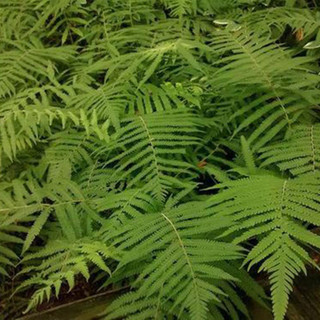
These plants excel as ground cover under trees or in shaded borders, where their dense foliage suppresses weeds and creates a lush understory. They work beautifully when combined with early spring bulbs or ferns for a layered look. Compact enough for container planting, hellebores also add seasonal charm to patios and balconies.
Plant hellebores in early fall or spring in well-draining soil rich in organic matter. They prefer partial to full shade and benefit from consistent moisture, especially during dry periods. Apply a balanced, slow-release fertilizer in early spring to support growth and flowering.
Prune damaged or dead foliage in late winter before new growth emerges to maintain plant health and a tidy appearance. In colder climates, apply a layer of mulch around the base to protect roots from freezing temperatures. Hellebores adapt well to container gardening; use a loose, well-drained potting mix and a container with adequate drainage holes.






 Growing Zones: 4 to 9